Summer in Perth brings sunshine, heat and some beautiful bird broods! A lot of Perth birds breed in late winter, spring and early summer and so once we get into summer – young birds abound! Some may have just hatched while others will be strutting around confidently like teenagers.
Some of them are still reliant on Mum and Dad for protection, guidance and comfort.
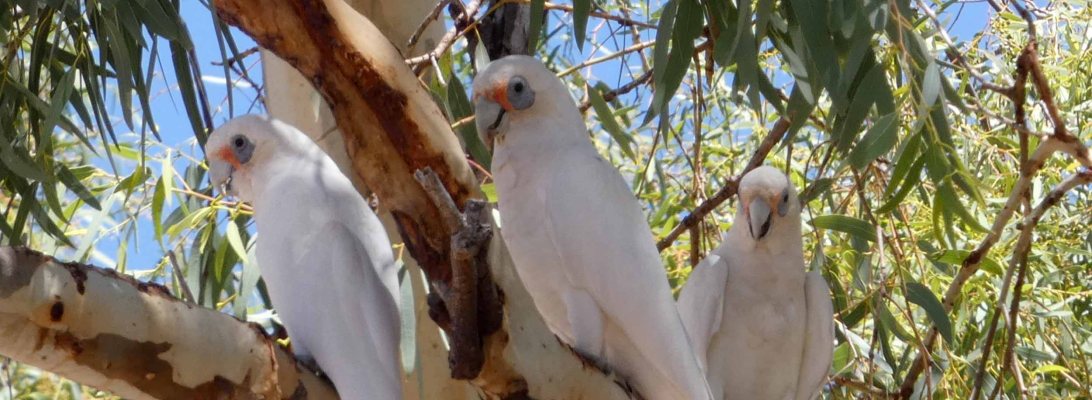
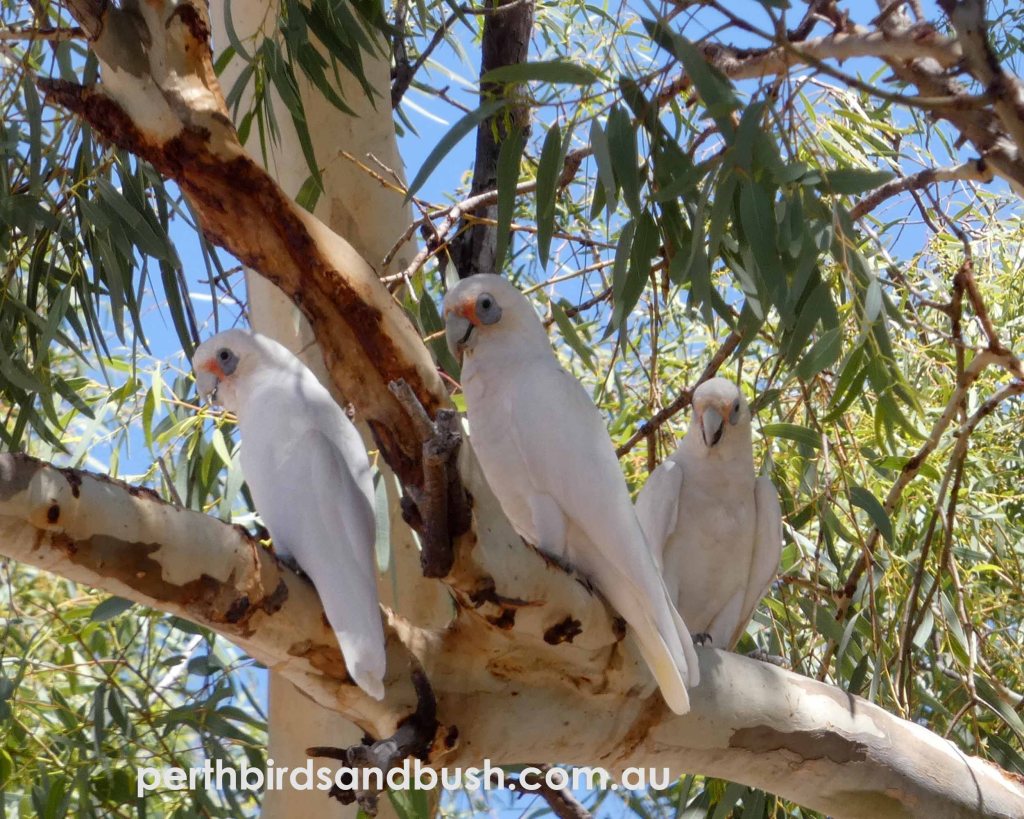
Western Corellas – Mum, Dad and their youngster, 20 February 2026.
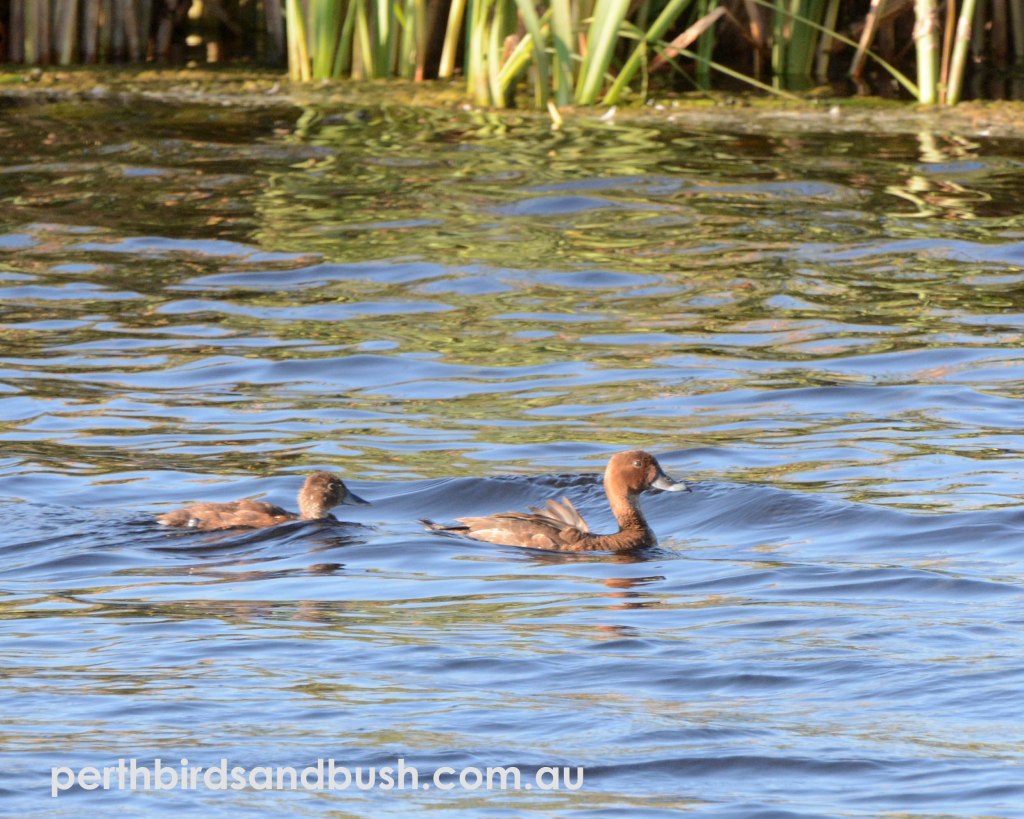
Hardhead mother and juvenile, 24 January 2026
Some are off on their own exploring the skies and looking for something to eat!
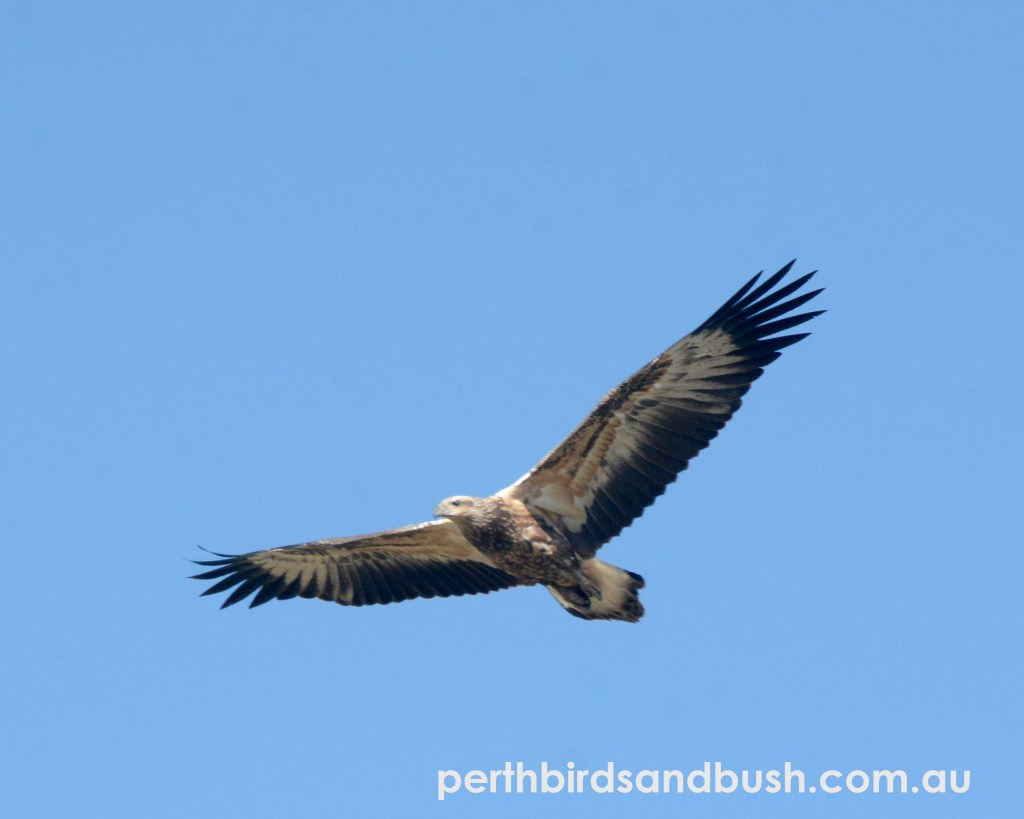
Juvenile White-Bellied Sea-Eagle, 4 February 2026
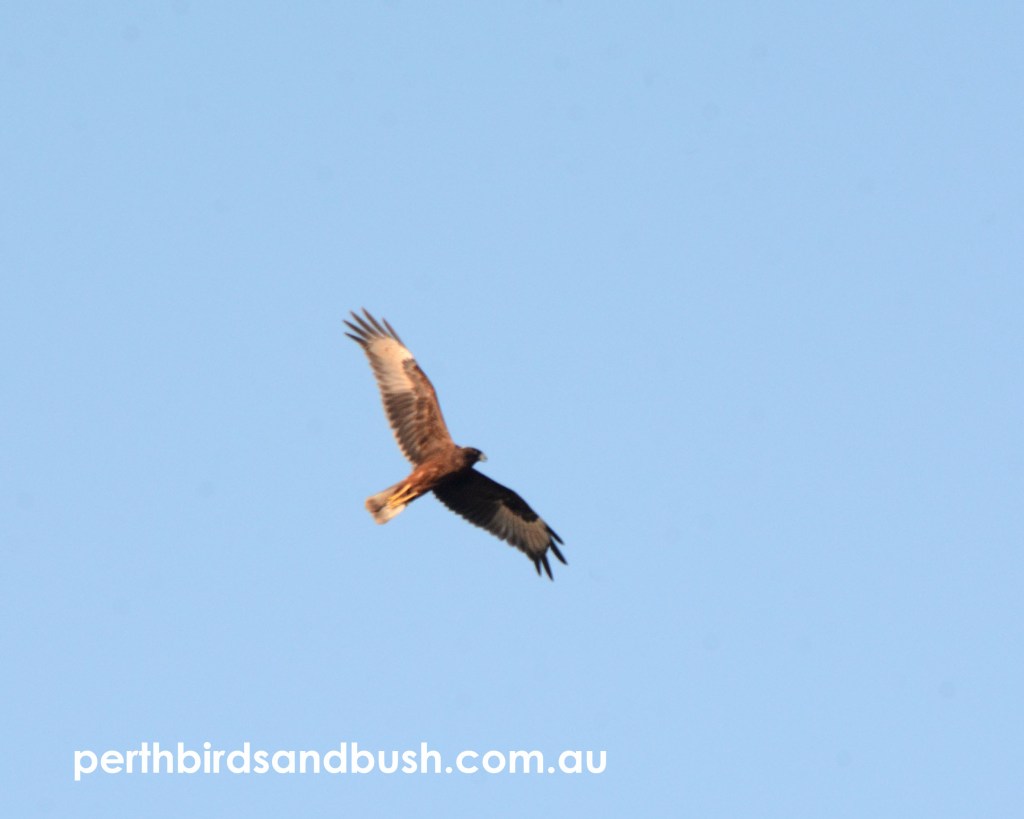
Juvenile Swamp Harrier, 24 January 2026
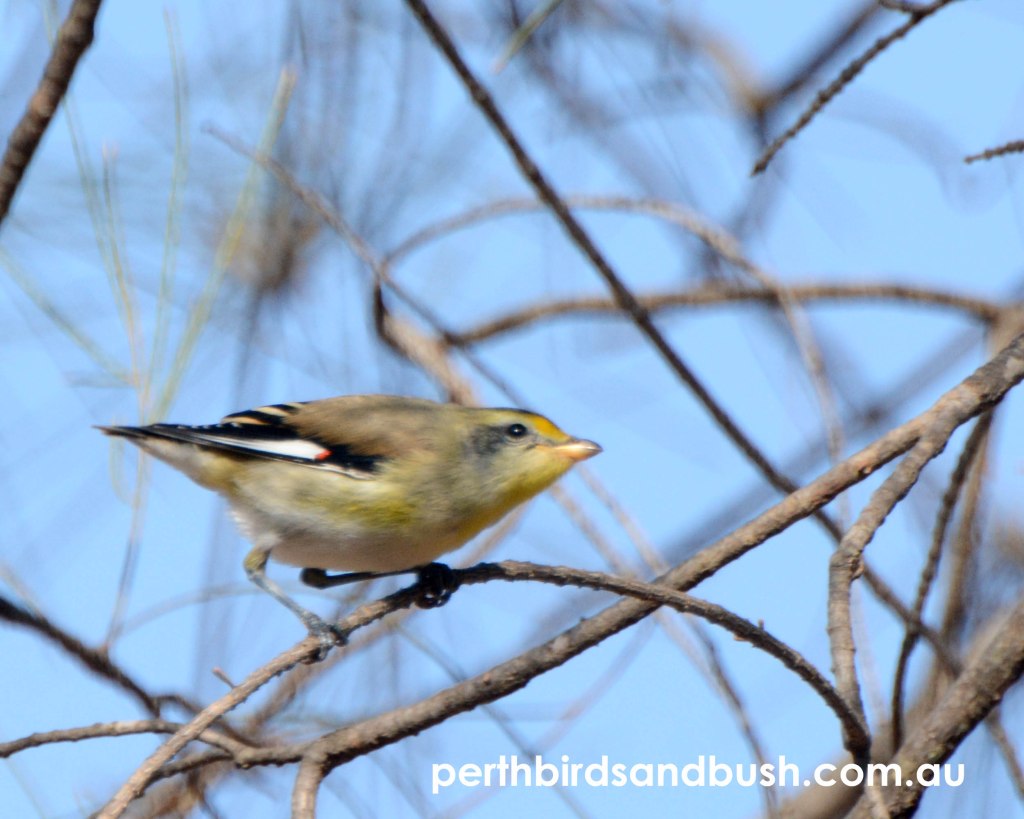
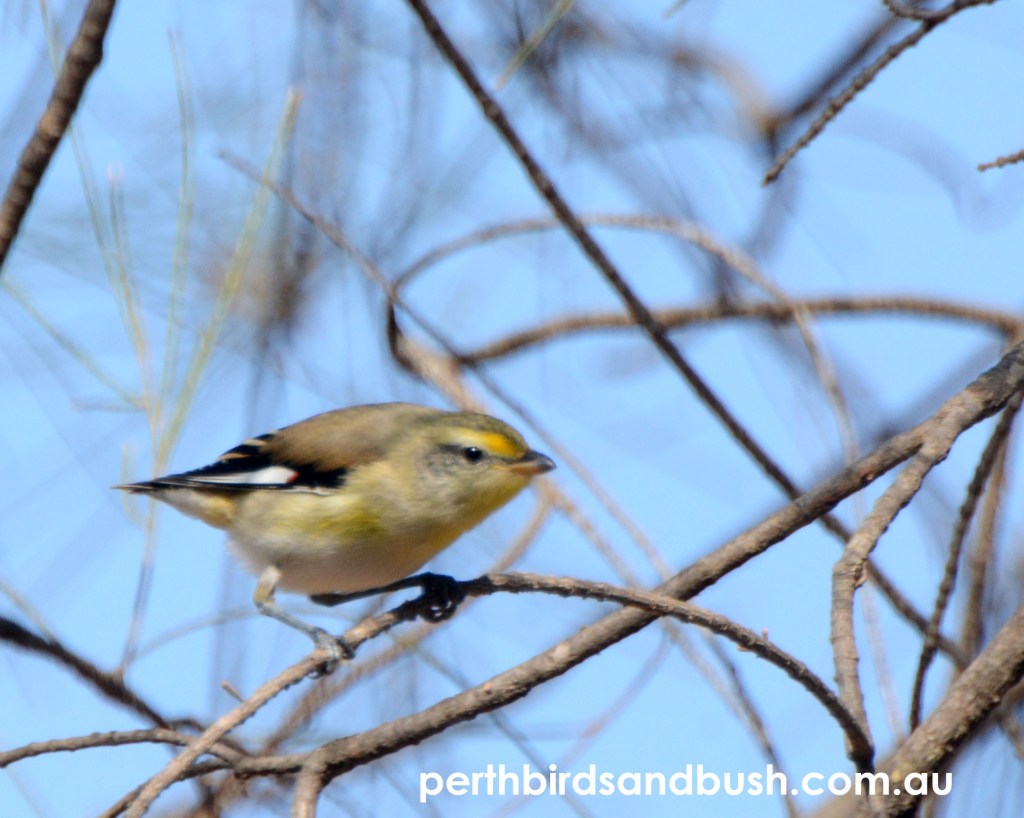
We came across a group of juvenile Striated Pardalotes in mid January 2026 that were very curious about what we were! They were very curious about what we were and came up very close to get a good look at us! This was an hour out of Perth in Wandoo forest.
While young birds often don’t look as glamerous as adults, its wonderful to be out birding in Summer as there are more birds around and it’s nice to see the different plumages of the youngsters.
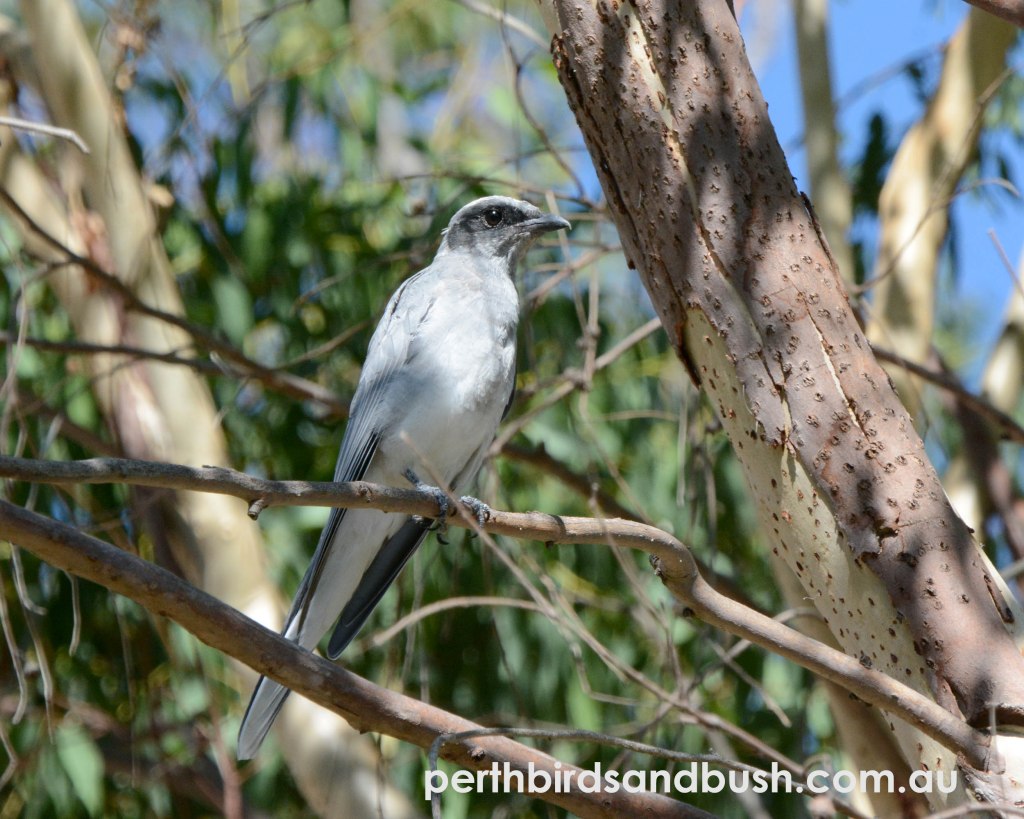
Immature Black-faced Cuckoo-shrike, 4 February 2026.
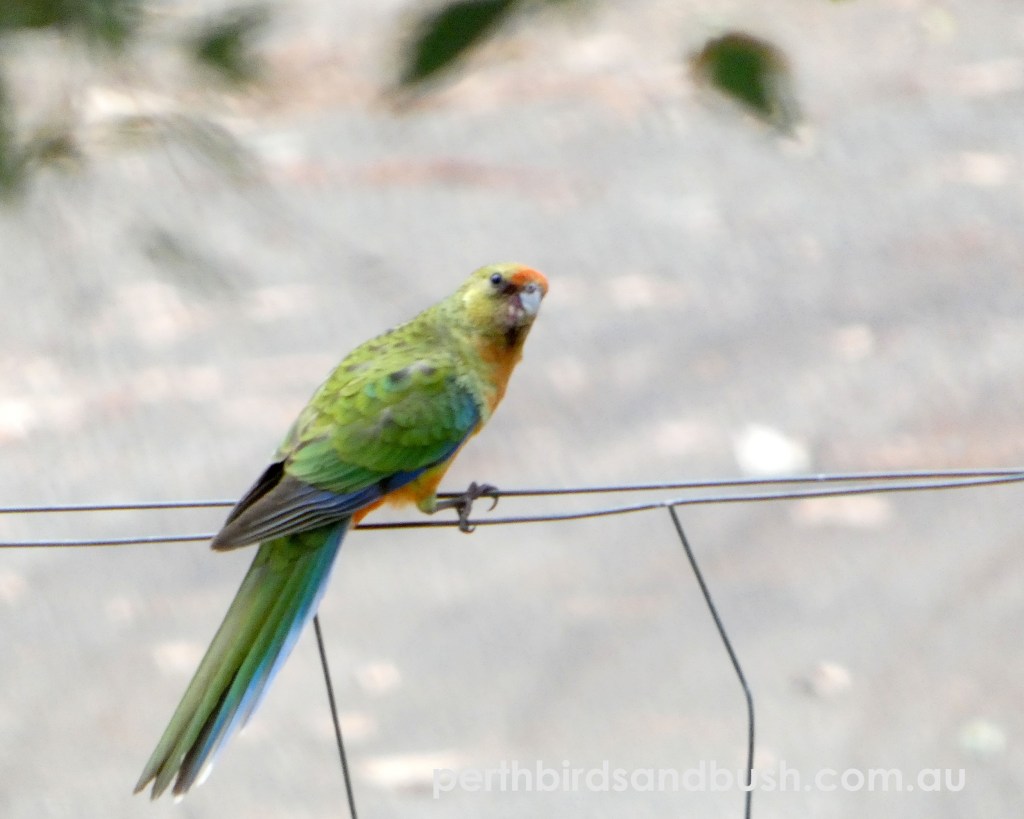
Juvenile Western Rosella, 9 February 2026
Nyoongar people have six seasons and Birak is roughly in December and January. It is sometimes known as the first summer and it is the time of the young birds and other animals. While Bunuru is roughly February and March and is known as the second summer and the season of adolescence. Find out more about the six seasons at: https://www.thewetlandscentre.org.au/blog/the-six-seasons-of-the-nyoongar-calendar/
All these young birds are aging into beautiful adults now that we are well into Bunuru! They are filling the ground, wetlands, trees and skies with colour, beauty and wonderful songs!
There is joy in Australian birding circles that the International Ornithological Congress (IOC) have split the Crested Shriketit into separate Western, Northern and Eastern species! This has been a long overdue taxonomical split with ranges of all three species separated by thousands of kilometers and all having different plumages.
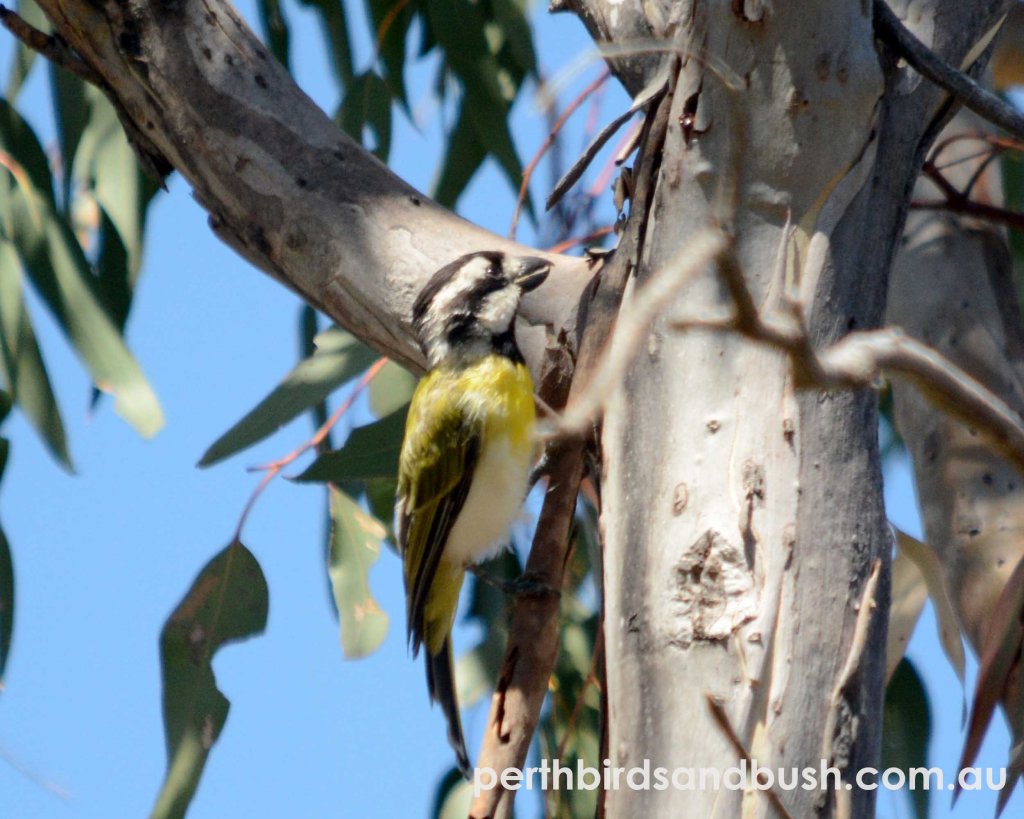
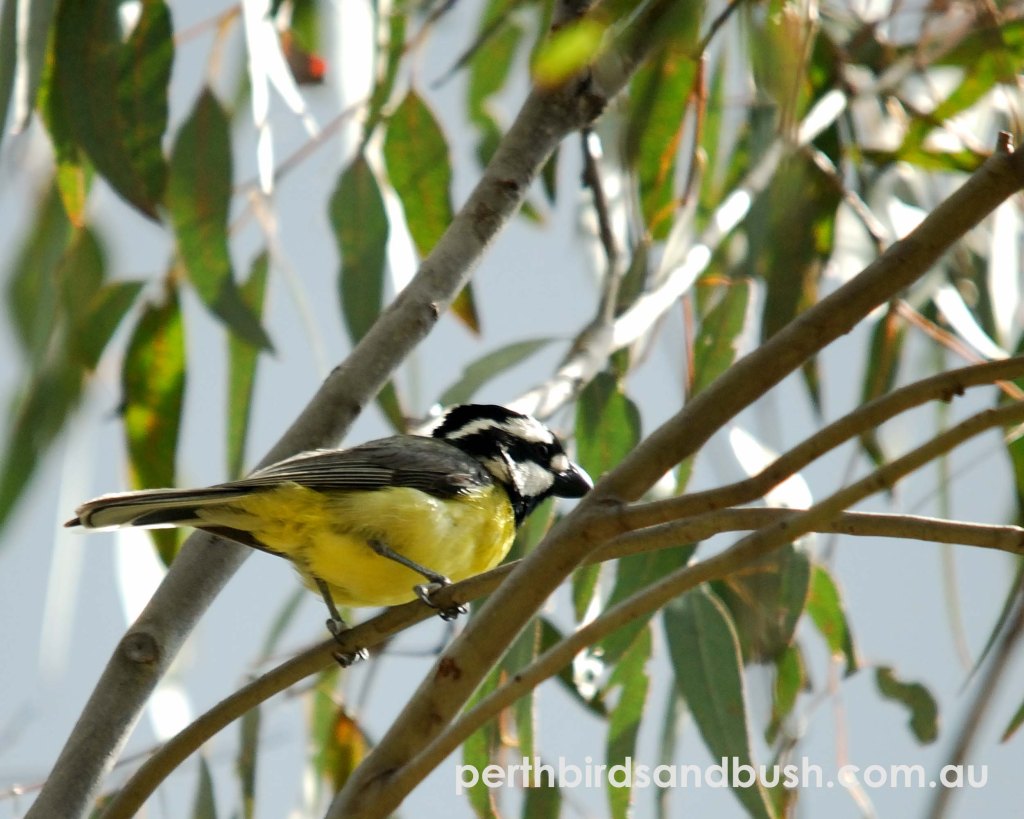
Western Shriketit male lower breast is white.
Eastern Shriketit male lower breast to undertail coverts are yellow. Photographed in New South Wales.
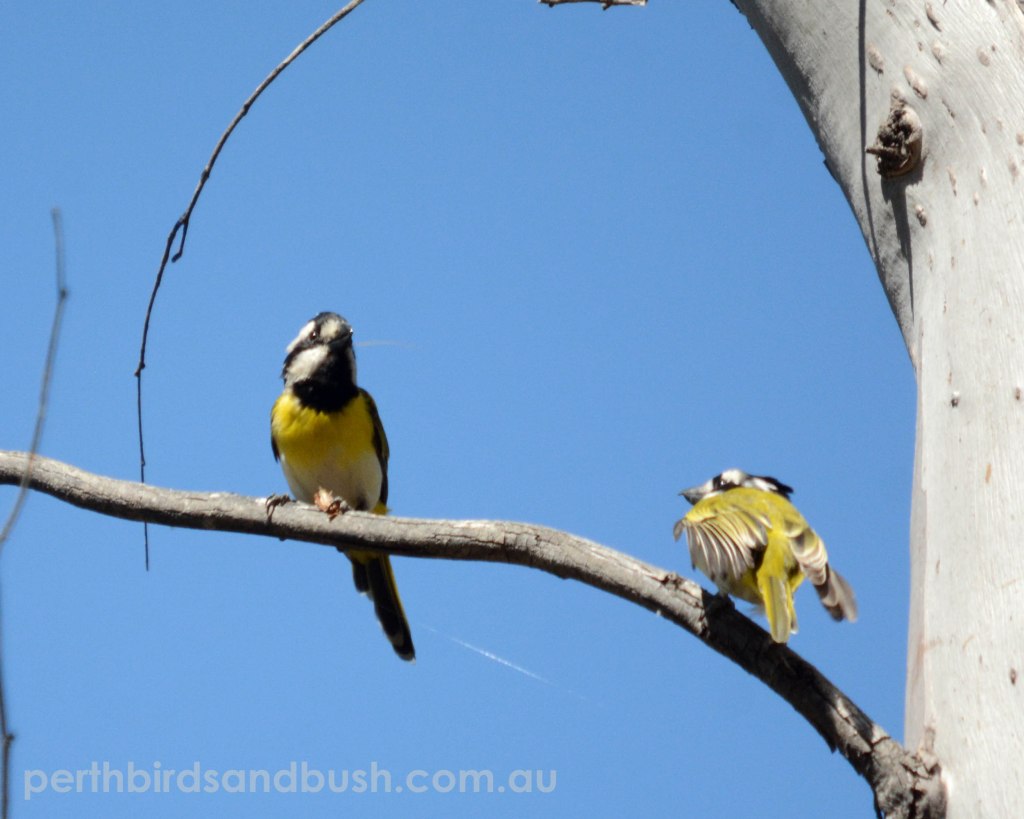
The taxonomical change occurred on 5 February 2023, so it was a delight to see two Western Shriketit in mid-Febraury with Howard while on a bush birdwatching tour! We stood still, watching and photographing them for about 10 minutes. They have to be one of the most beautiful and charismatic birds in Australia!
Western Shriketit seen with Howard February 2023.
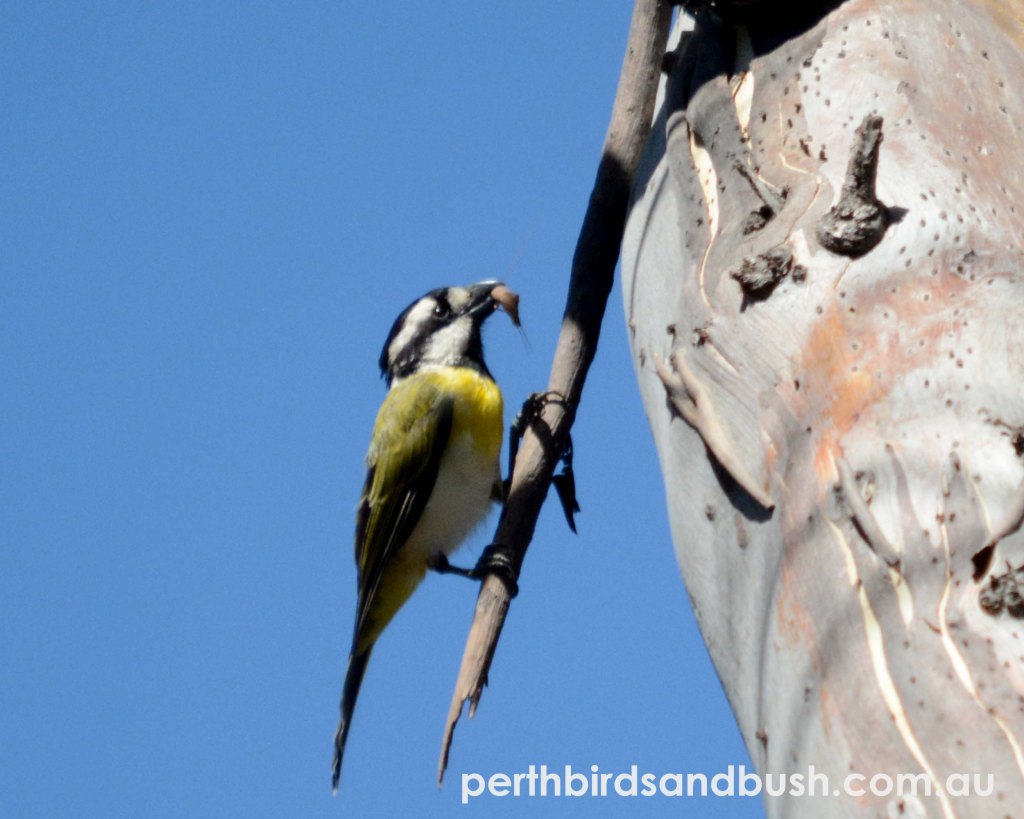
The two birds appeared to be a male and a young male that was not fully fledged and looking for food from Dad!
The youngster was following the adult male.
Perhaps the adult was trying to show the young bird how to forage for itself.
Are you going to share that juicy insect with me Dad?
It will be interesting to see if any of these species will now have a different conservation status. BirdLife Australia’s Working List of Australian Birds 4.1 has the three species at full species status and all with a Least Concern conservation status. But this may be a carry over from before the taxonomical spilt. Similarly BirdLife International have the Northern Shriketit as Least Concern although the information there looks like it may be precarious, Western Shriketit is also listed as Least Concern but has a declining population and Eastern Shriketit is listed as Least Concern with a declining population but a much larger range than the other two species. The Australian Government has Northern Shriketit as a Vulnerable subspecies as does the Western Australian Govenment. Western Shriketit does not have this status with the State or National Government.
The Western Shriketit is certainly an uncommon bird and maybe worthy of more study. Hopefully the full species status will provide a bit more of a reason to research this species and the Northern Shriketit. Its certainly worth documenting records of these birds via Birdata, e-bird, iNaturalist and other databases for future research studies.
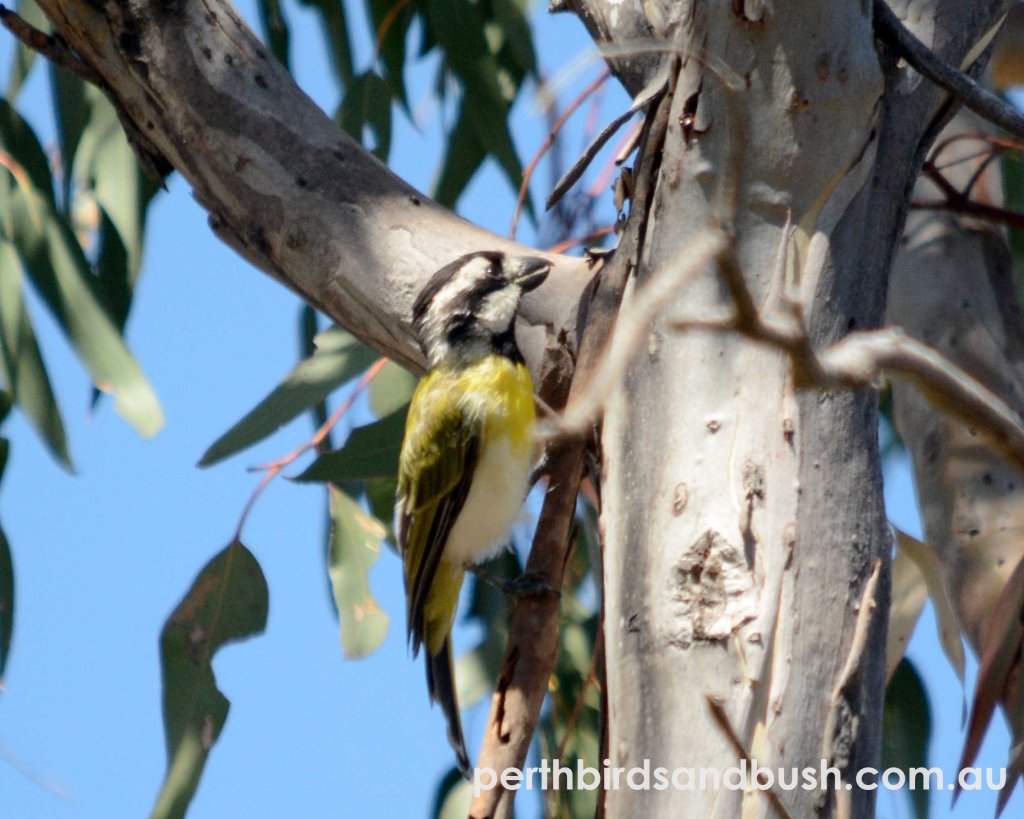
Western Shriketit foraging on a Eucalyptus wandoo tree.
A few months back I wrote about Citizen science and the Birdata app. Another app that I use is Questagame. It is for documenting any living species, whether plant, fungi, fish, bird, insect, spider etc. Questagame is an Australian app but can be used world wide.
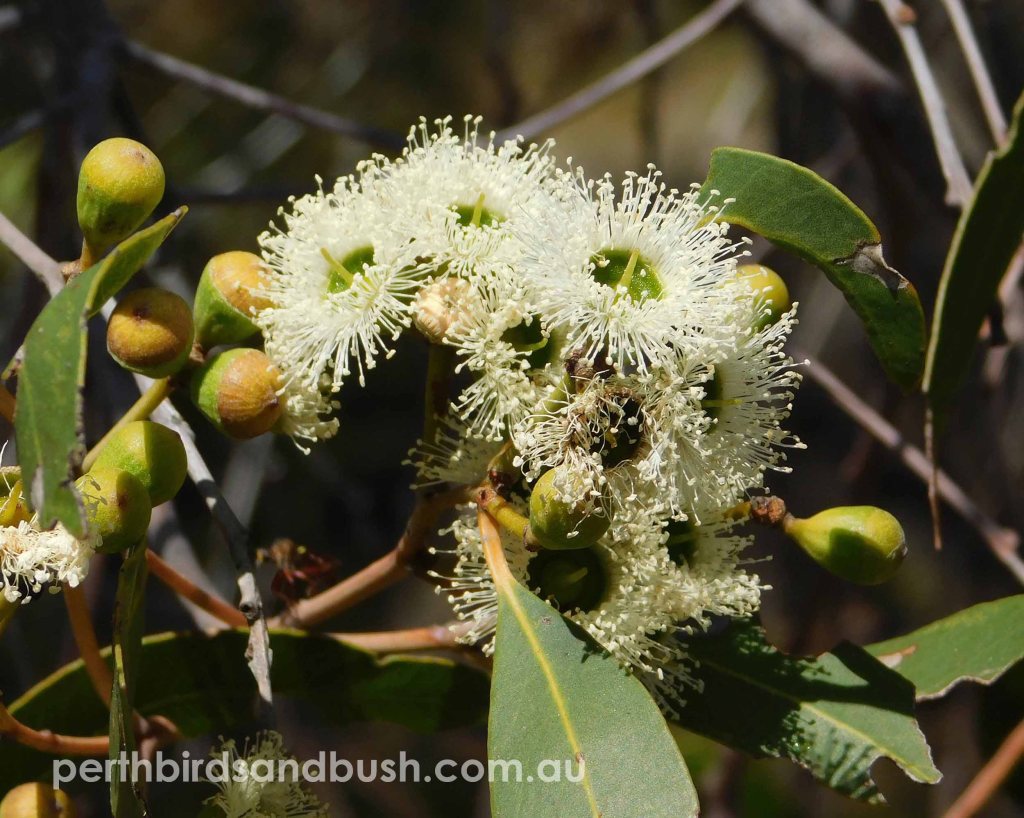
Pricklybark (Eucalyptus todtiana) is flowering in the Perth area in February and March. This image was submitted to Questagame, identified and will become a record in the Atlas of Living Australia. For plants it is best to include in your submission photographs of each of the flowers, fruits, leaves, stems and entire plant.
You can use the app to submit photographs and locations etc of plants or creatures that you have found to find out what they are and to have them added to the Atlas of living Australia. Or you can help identify other peoples submissions. Either way, you are contributing to the knowledge of living species for use in research and conservation.
This cicada was found dead on a track near Denmark, Western Australia in February and submitted to Questagame. It is a Red Bandit (Pyropsalta melete) with and this species only has 53 records in the Atlas of Living Australia as seen here.
The phone app is set up within a gaming structure with clans, points, leaderboards etc. So it can become a competitive and social experience. But you don’t need to be concerned about either of these aspects if you don’t want to!
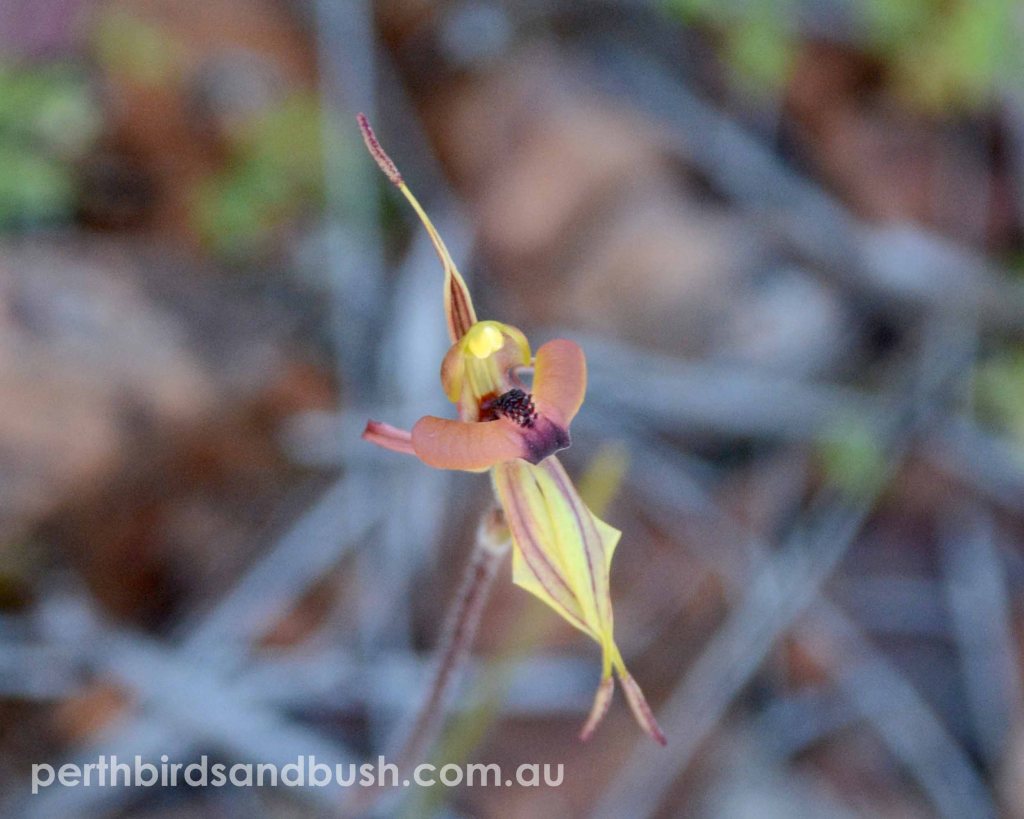
Puppet Orchid (Caladenia incrassata) photographed in the Helena Aurora Ranges. This image was the first image in the Atlas of Living Australia of this species. This species only has 38 records in the Atlas of Living Australia.
It is very exciting if your record is the first one in the Atlas of Living Australia or if it provides the first photographs to the Atlas of Living Australia!
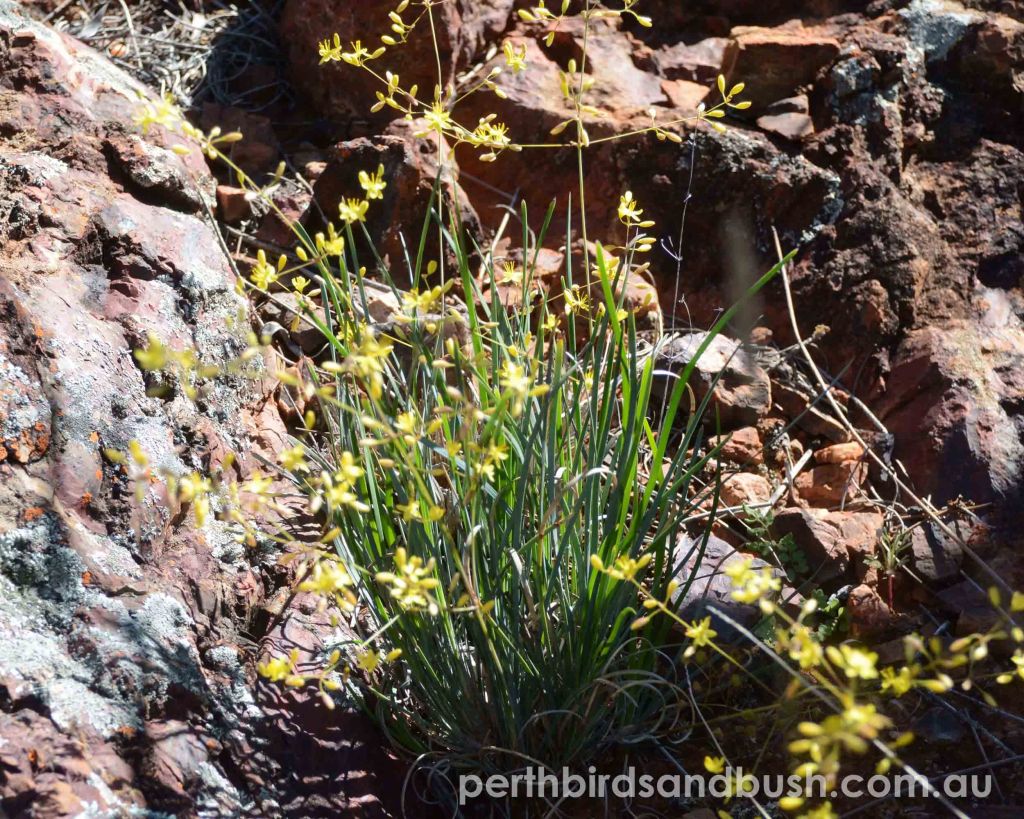
Chamaexeros macranthera photographed in the Helena Aurora Ranges. This is the only image of this species in the Atlas of Living Australia. While this was photographed in a fairly remote area, you can still find species in the Perth area that represent the first record of a species or the first for the state etc.
One thing that I have been doing is documenting flora and fauna in some of my favourite places or places that I am concerned may be bulldosed for a future development. These records become very useful in the future if they provide evidence that something endangered may be present in the area. Just take a look at some of the over 6000 species within 10km of Perth already in the Atlas! These records come from museum records, birdata observations, Questagame submissions and many other sources.
If nothing else, it gives you an excuse to get out in the bush and photograph what you see!
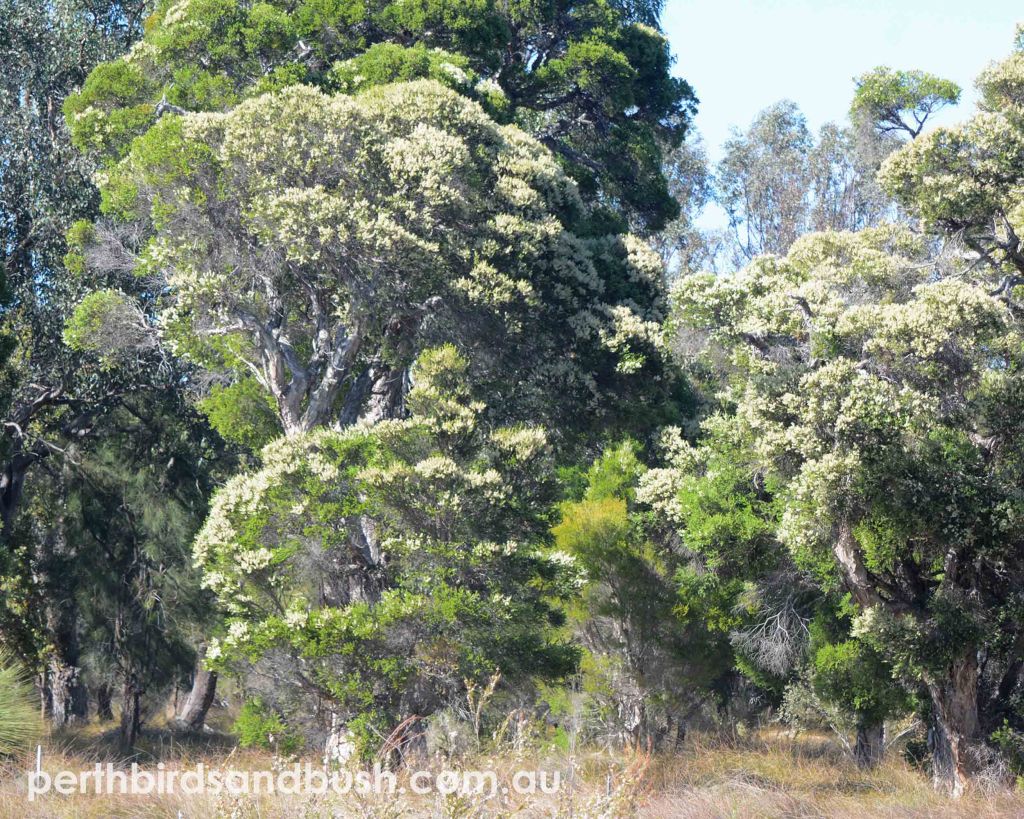
When I am bird watching or looking at wildflowers, I am often looking at the sky, the shrubbery, the ground, the water or the tree tops. But I don’t often look at the trees! Sometimes a tree or group of trees will stand out and look simply stunning. Driving thru the Wandoo east of Perth, is one of those moments when I find myself looking at those beautiful trees!
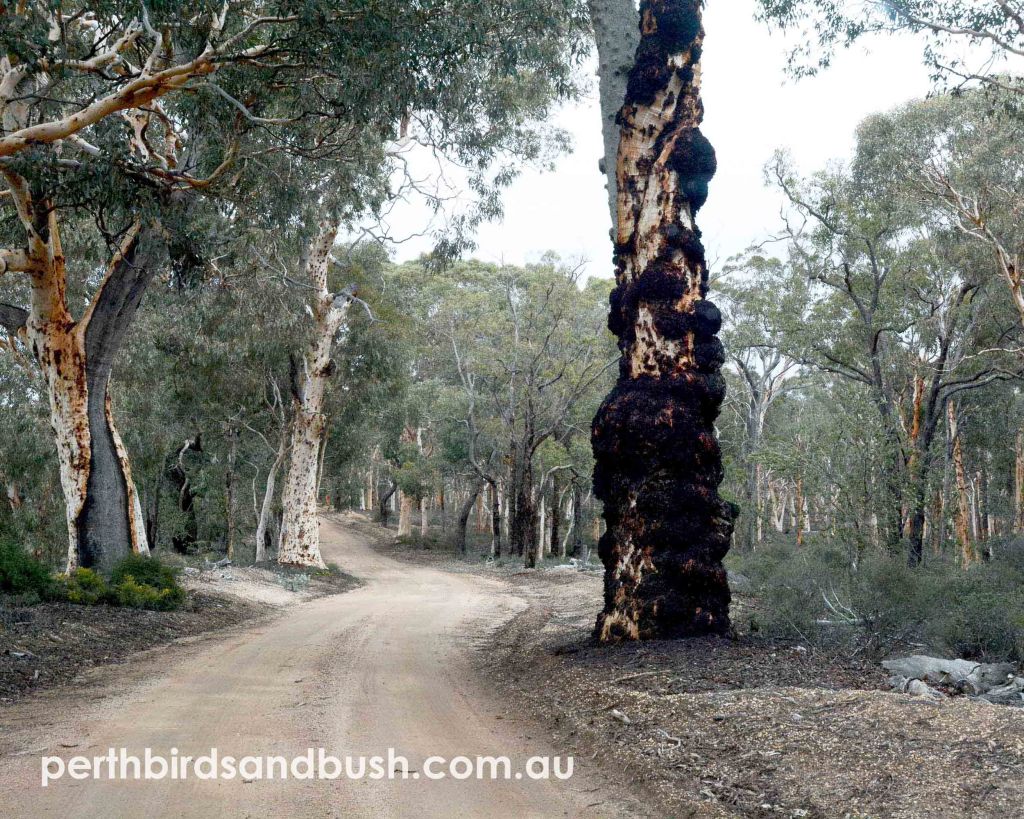
Wandoo National Park east of Perth.
Trees provide the structure of our bush, food and shelter for birds and other animals, and in a hot summer, some very welcome shade.
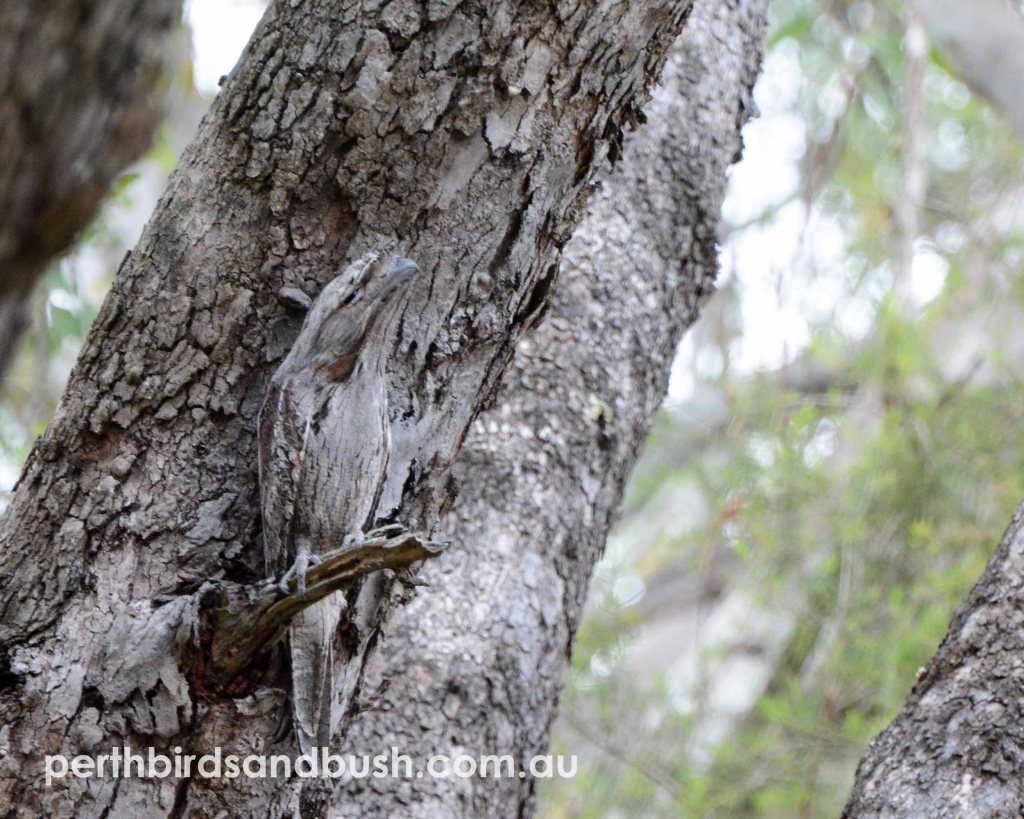
Tawny Frogmouth camouflaging and resting near the trunk of a Flooded or Swamp Gum (Eucalyptus rudis).
A tree is biologically defined as a perenial plant, greater than 4 metres in height, with woody stems and branches and with a truck tightly bound to the earth. There is quite a variety of trees that are native to the Perth area. Some of those that are flowering in January are:
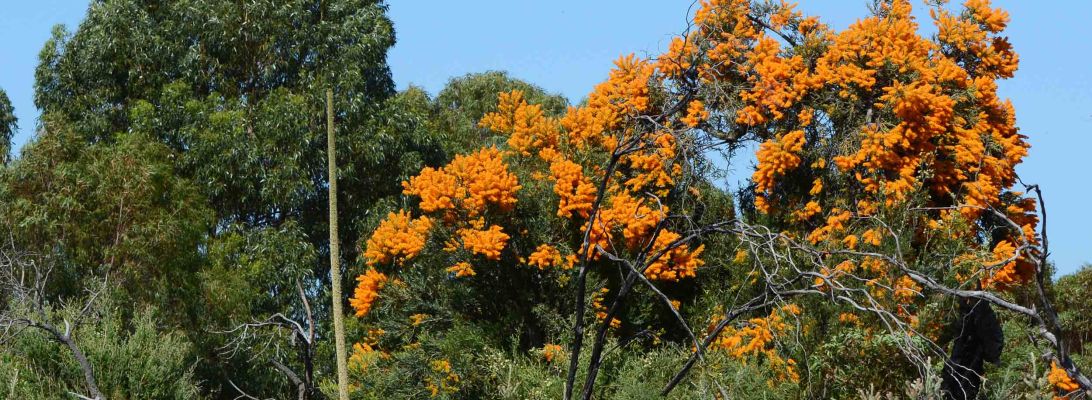
The Western Australian Christmas Tree or Moojar (Nuytsia florabunda) is the largest parasitic plant in the world! Moojar is a highly significant plant to the Noongar people as a ghost tree or tree of souls (see more).Moonah (Melaleucapreissiana) is a tall paperbark that grows from about Geraldton to Albany in sandy soils and swamps. It is a prolific flowerer. The Noongar people used the leaves to treat colds and headaches and the bark was used for a variety of purposes (see more)Jarrah (Eucalyptus marginata) is found from about Greenhead to Bremer Bay and is a very common tree in Perth bush. Jarrah furniture has a rich red colour and can be found in many furtinature stores in Western Australia. It grows to a height of 40 metres!Slender or Candlestick Banksia or Piara (Banksia attenuata) is a wide spread species which can be found from Shark Bay to Bremer Bay. Its beautiful yellow flowers are long cylindric shaped and grow to 26 centimetres long! The flowers are used by Noongar people for medicine and as a refreshment (see more).
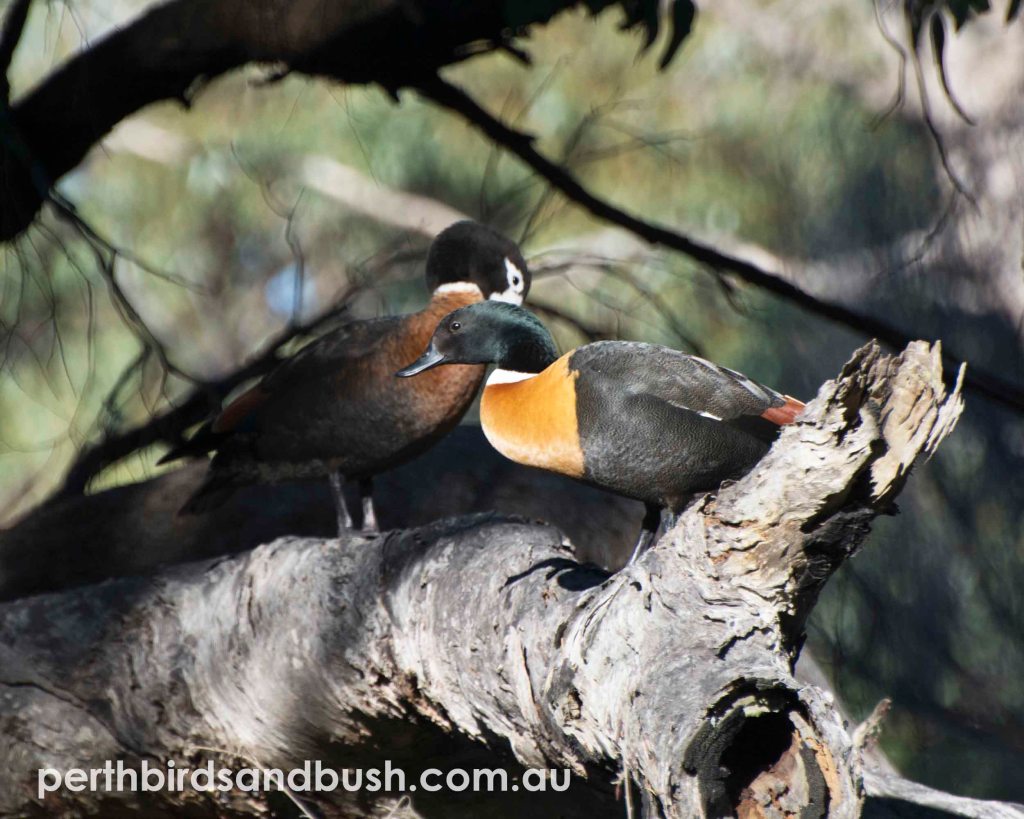
Trees also provide habitat for nests, either to be built on a branch or fork or in a hollow. Some trees take many decades before they can provide nesting hollows for many birds.
These Australian Shelduck (Tadorna tadornoides) were seen in a Tuart (Eucalyptusgomphocephala) forest near the beach during breeding season. Tuart trees drop branches and provide hollows for many bird species to nest in. Tuart are another tall tree that flower in January. Find out more about Tuarts here.
We all need to protect and take care of our trees. Many thousands are cut down in Western Australia each year and many thousands are also planted by conservation groups, farmers and those that care. Unfortunately, a newly planted tree will take a very long time to provide the habitat that an old one, cut down provided, sometimes hundreds of years. But it is very important to plant trees for the future generations of people and animals alike. You can usually find an environmental group that is planting trees in winter, where ever you live in Perth. Join in with them – it’s good for the soul, good for the environment and you will enjoy the company of happy, caring people!










 Perth Birds and Bush