Summer in Perth brings sunshine, heat and some beautiful bird broods! A lot of Perth birds breed in late winter, spring and early summer and so once we get into summer – young birds abound! Some may have just hatched while others will be strutting around confidently like teenagers.
Some of them are still reliant on Mum and Dad for protection, guidance and comfort.
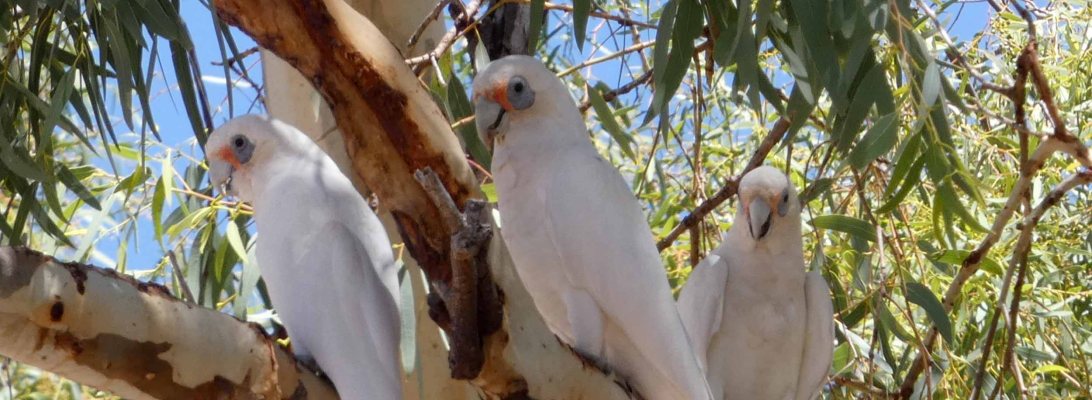
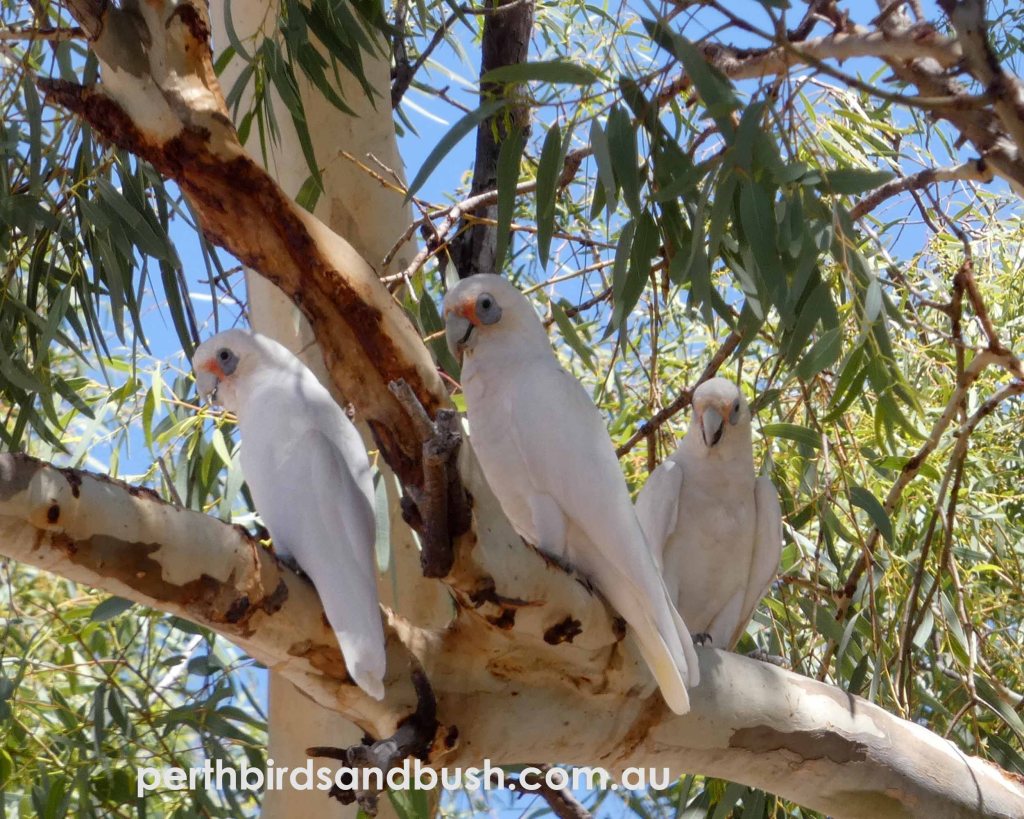
Western Corellas – Mum, Dad and their youngster, 20 February 2026.
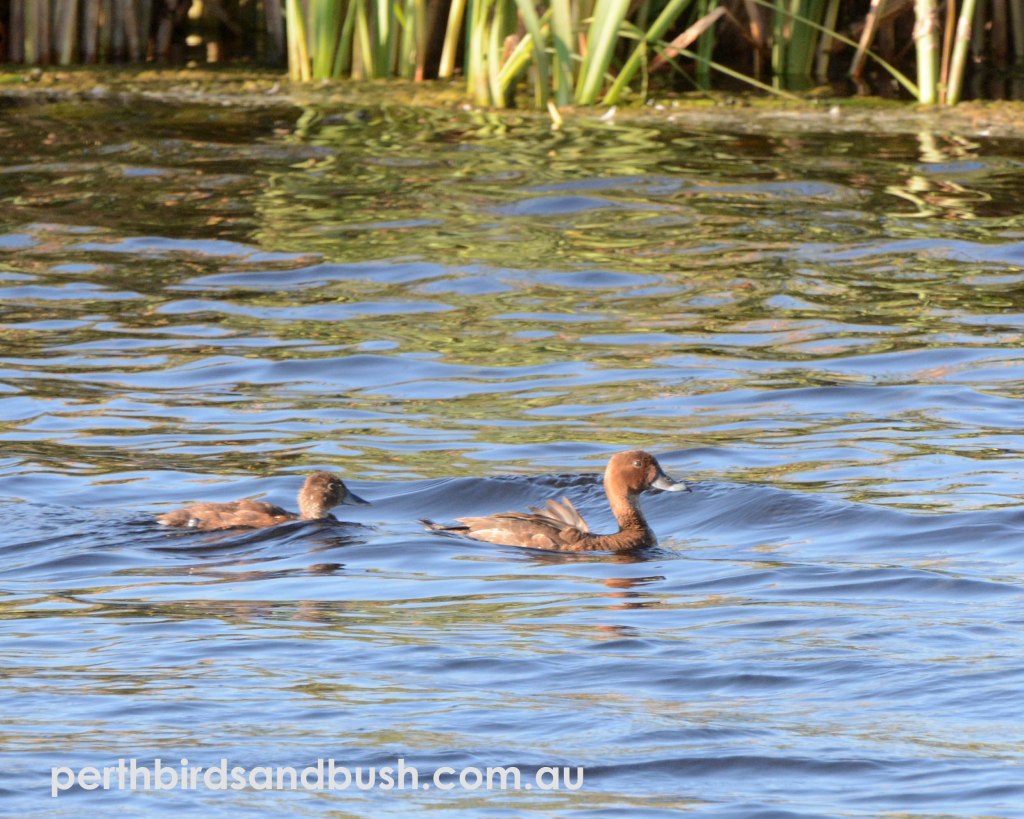
Hardhead mother and juvenile, 24 January 2026
Some are off on their own exploring the skies and looking for something to eat!
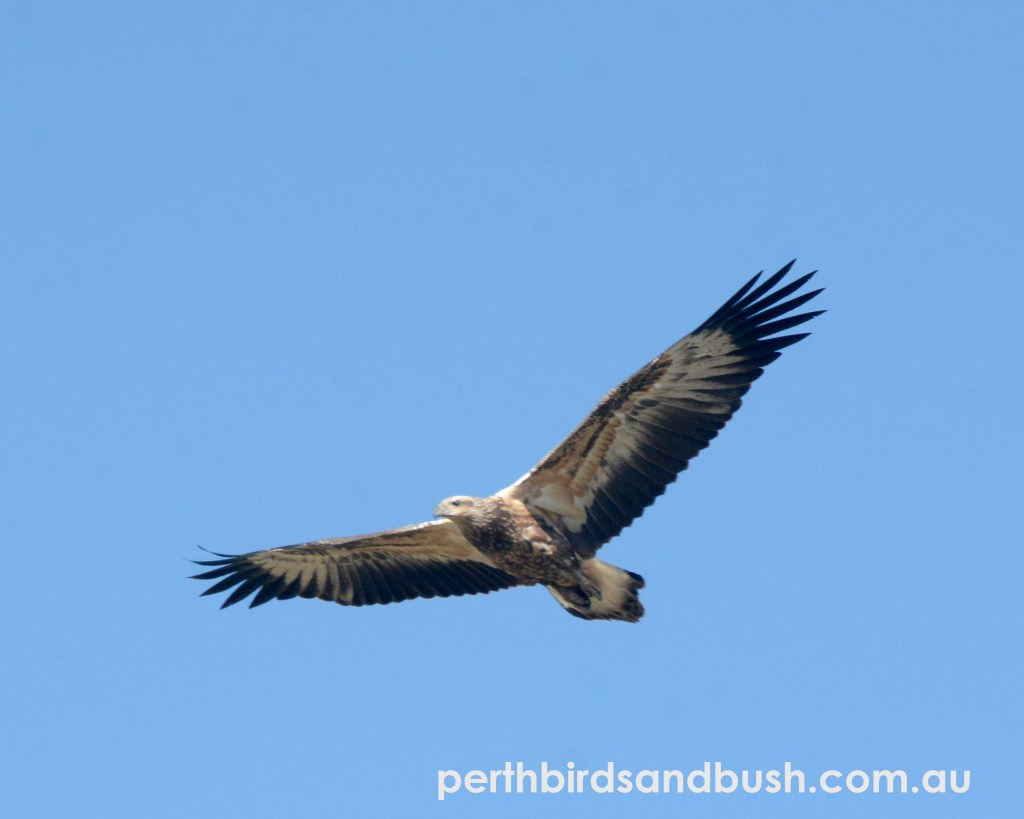
Juvenile White-Bellied Sea-Eagle, 4 February 2026
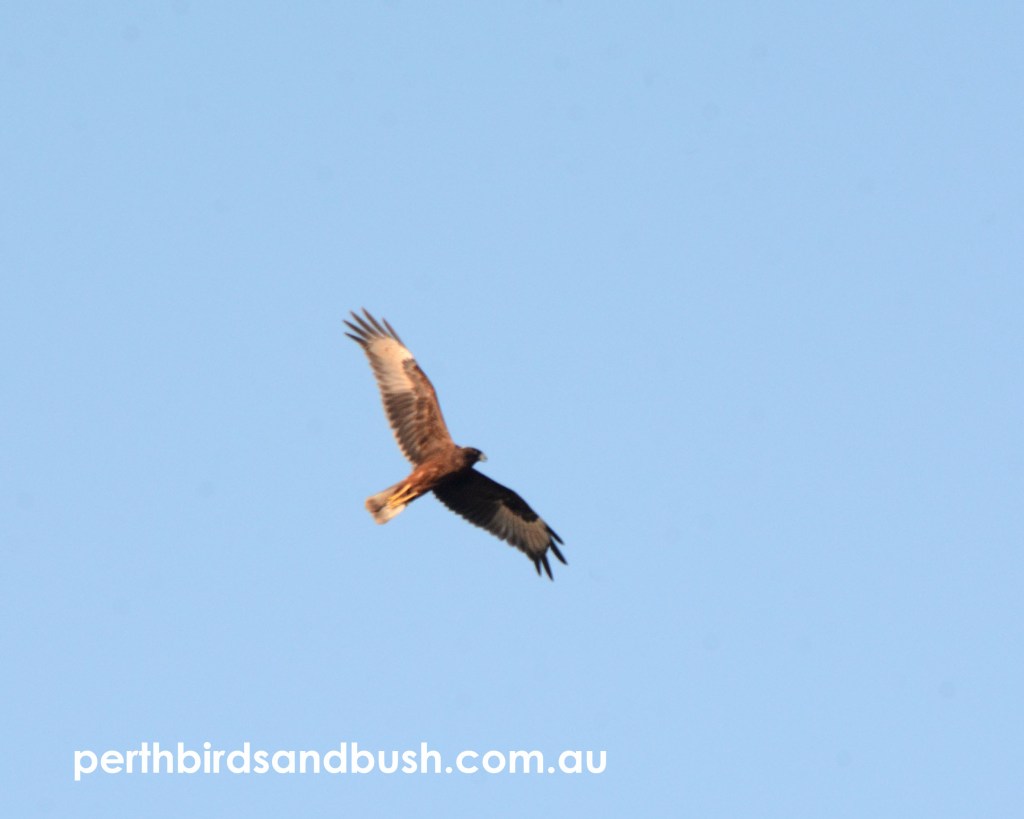
Juvenile Swamp Harrier, 24 January 2026
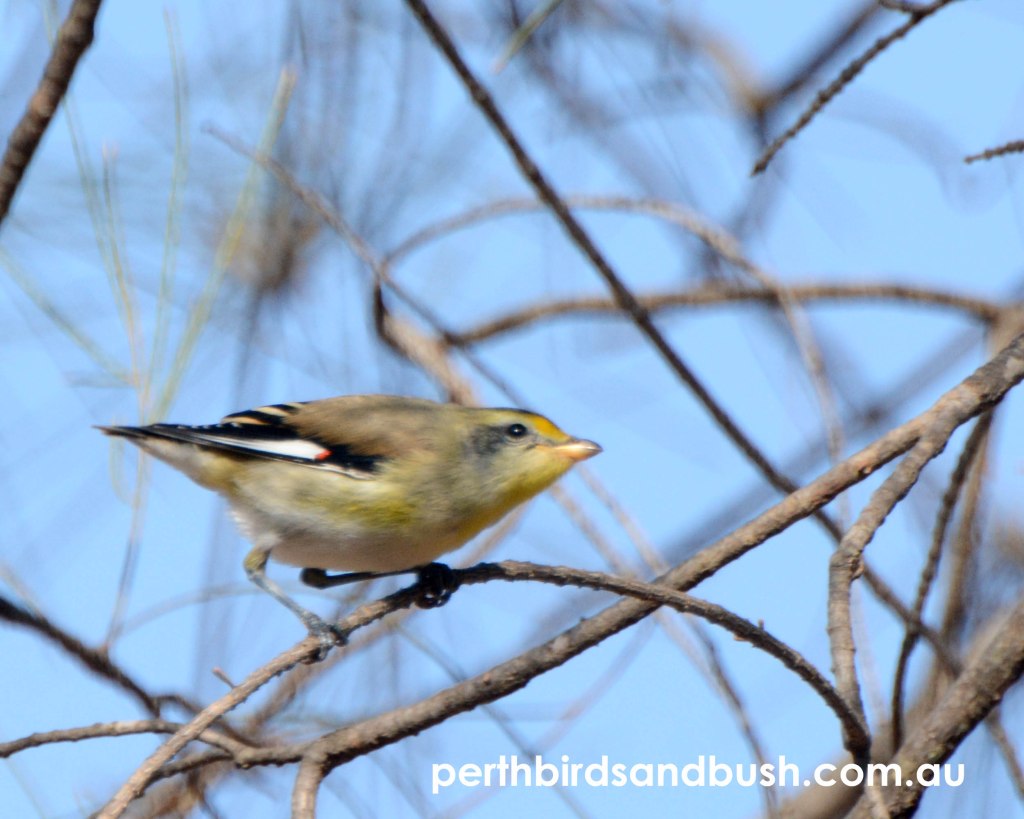
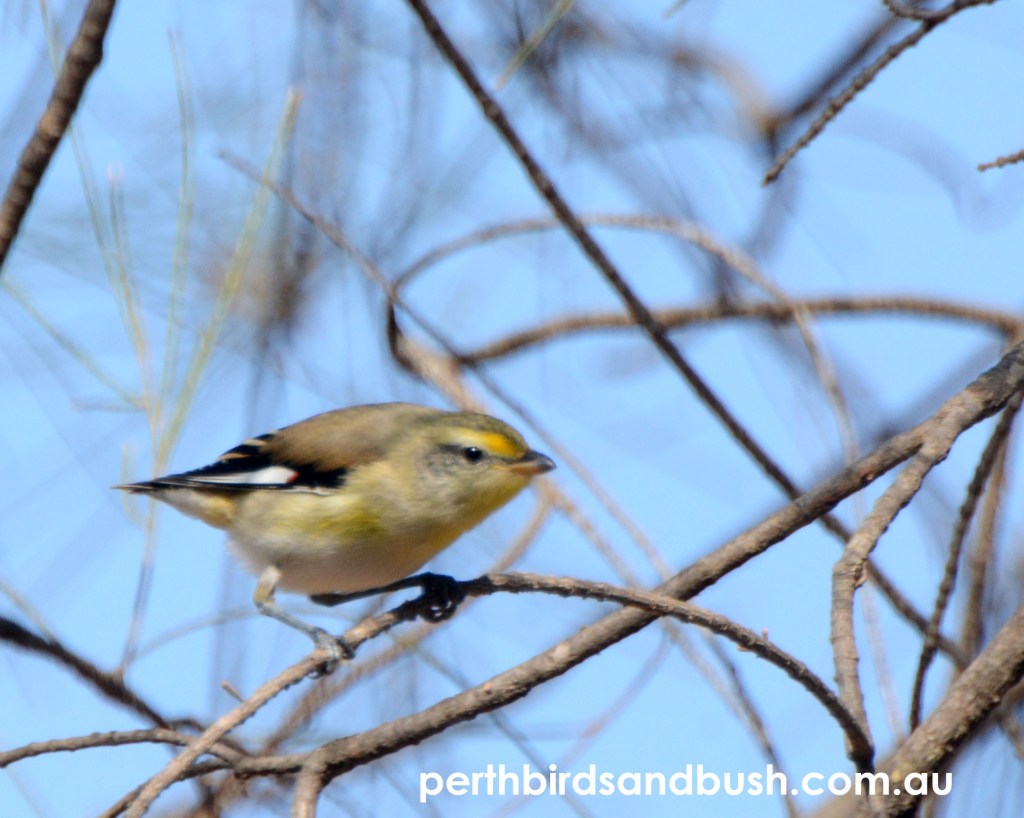
We came across a group of juvenile Striated Pardalotes in mid January 2026 that were very curious about what we were! They were very curious about what we were and came up very close to get a good look at us! This was an hour out of Perth in Wandoo forest.
While young birds often don’t look as glamerous as adults, its wonderful to be out birding in Summer as there are more birds around and it’s nice to see the different plumages of the youngsters.
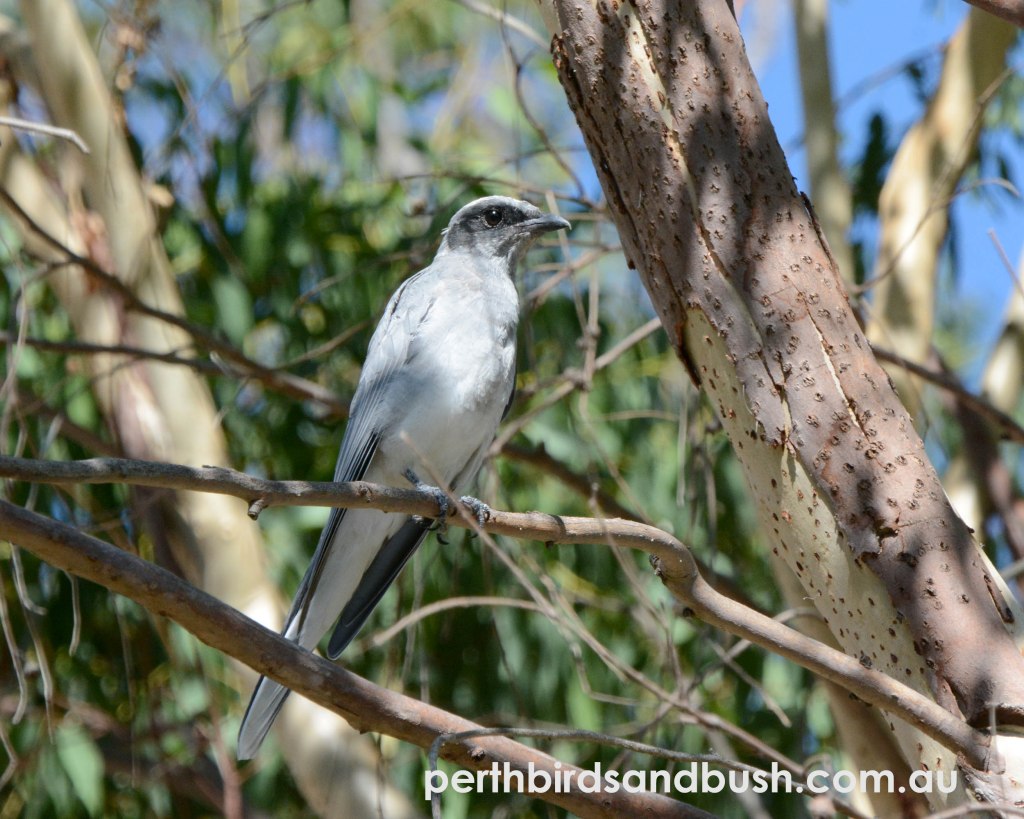
Immature Black-faced Cuckoo-shrike, 4 February 2026.
Juvenile Western Rosella, 9 February 2026
Nyoongar people have six seasons and Birak is roughly in December and January. It is sometimes known as the first summer and it is the time of the young birds and other animals. While Bunuru is roughly February and March and is known as the second summer and the season of adolescence. Find out more about the six seasons at: https://www.thewetlandscentre.org.au/blog/the-six-seasons-of-the-nyoongar-calendar/
All these young birds are aging into beautiful adults now that we are well into Bunuru! They are filling the ground, wetlands, trees and skies with colour, beauty and wonderful songs!
There is joy in Australian birding circles that the International Ornithological Congress (IOC) have split the Crested Shriketit into separate Western, Northern and Eastern species! This has been a long overdue taxonomical split with ranges of all three species separated by thousands of kilometers and all having different plumages.
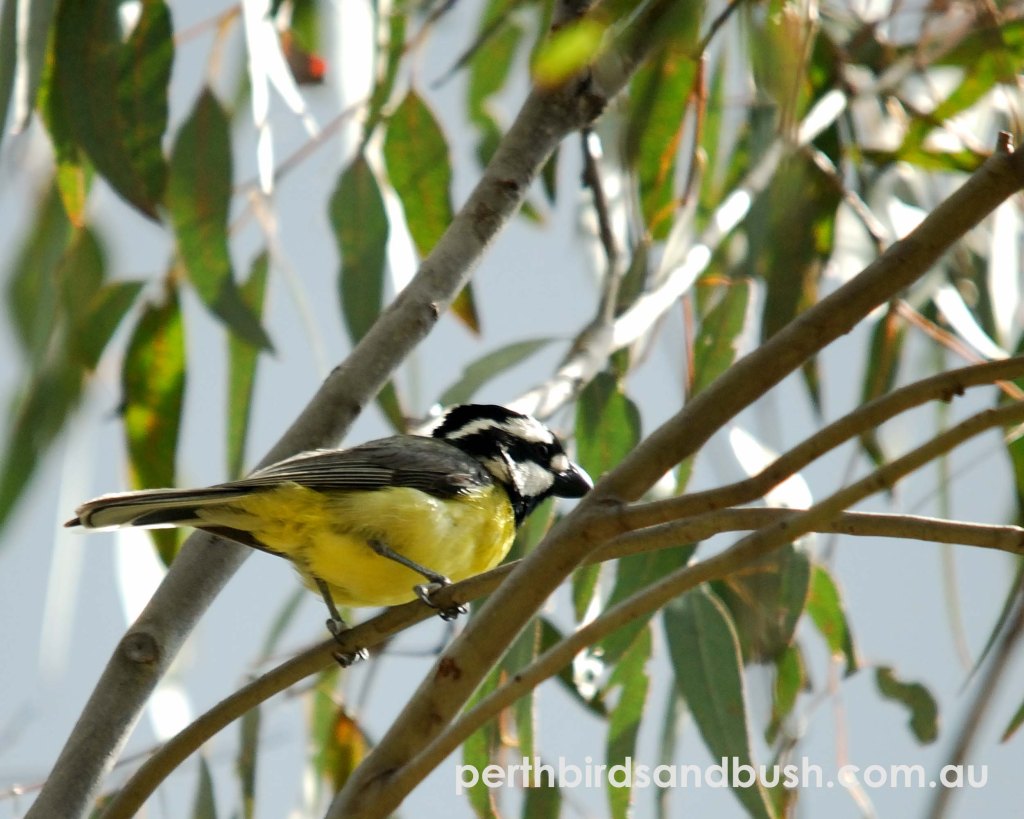
Western Shriketit male lower breast is white.
Eastern Shriketit male lower breast to undertail coverts are yellow. Photographed in New South Wales.
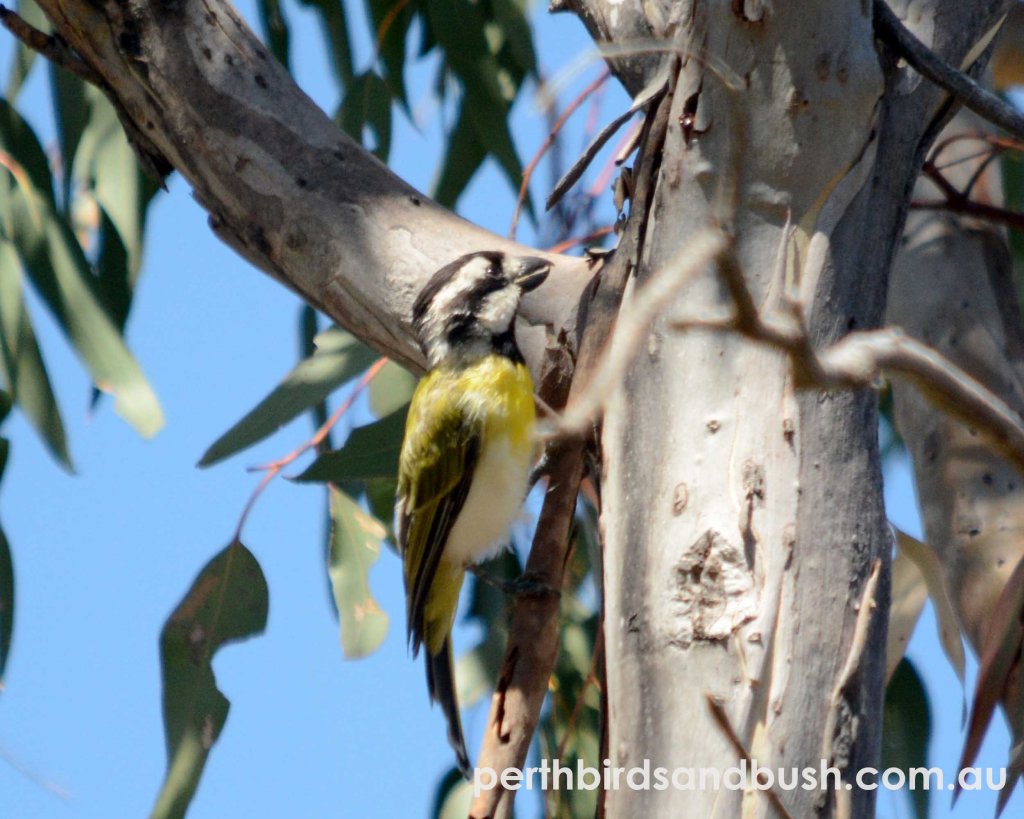
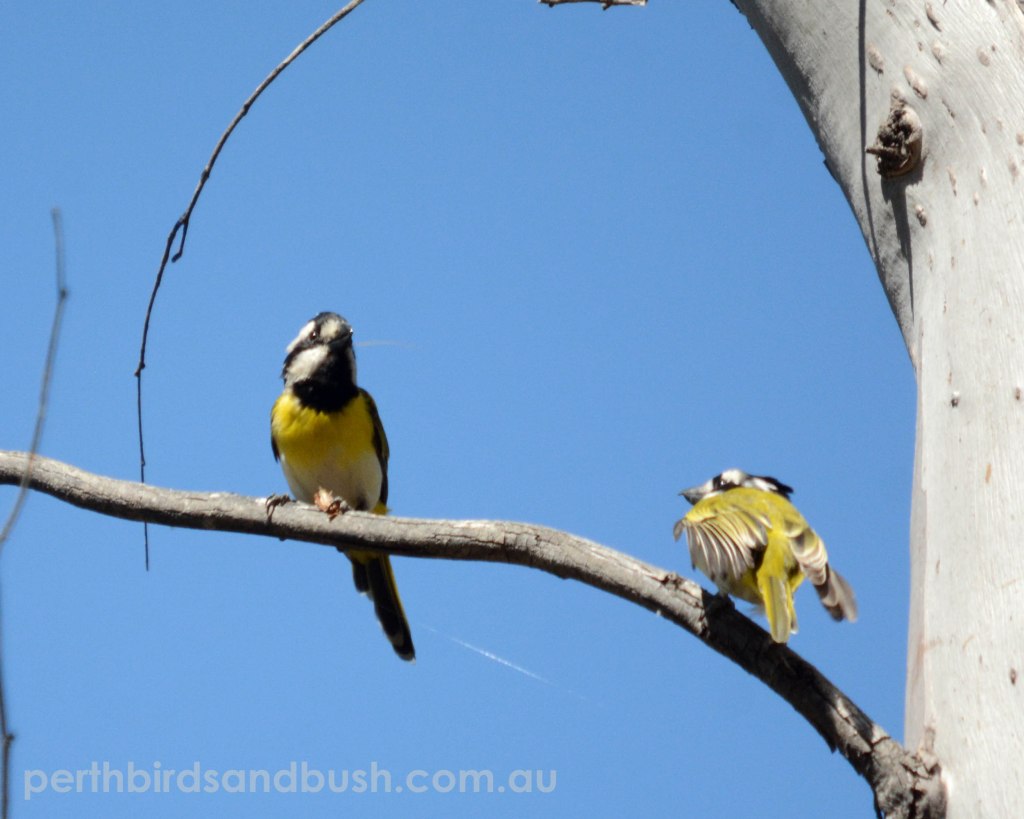
The taxonomical change occurred on 5 February 2023, so it was a delight to see two Western Shriketit in mid-Febraury with Howard while on a bush birdwatching tour! We stood still, watching and photographing them for about 10 minutes. They have to be one of the most beautiful and charismatic birds in Australia!
Western Shriketit seen with Howard February 2023.
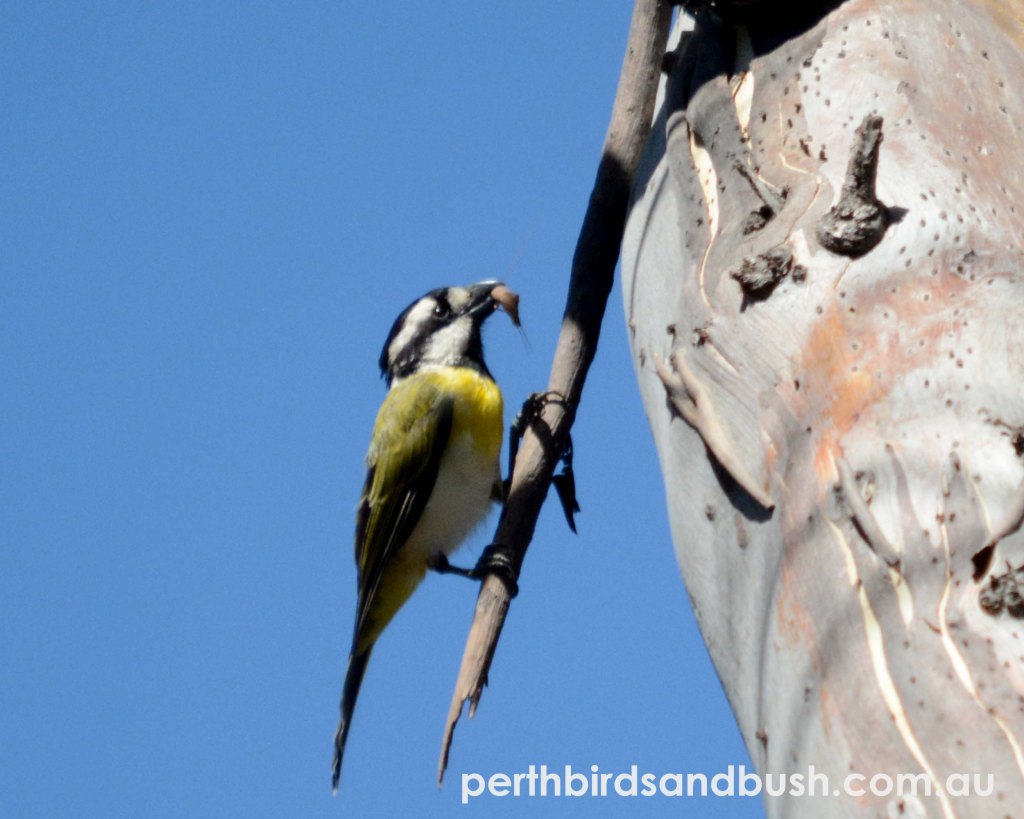
The two birds appeared to be a male and a young male that was not fully fledged and looking for food from Dad!
The youngster was following the adult male.
Perhaps the adult was trying to show the young bird how to forage for itself.
Are you going to share that juicy insect with me Dad?
It will be interesting to see if any of these species will now have a different conservation status. BirdLife Australia’s Working List of Australian Birds 4.1 has the three species at full species status and all with a Least Concern conservation status. But this may be a carry over from before the taxonomical spilt. Similarly BirdLife International have the Northern Shriketit as Least Concern although the information there looks like it may be precarious, Western Shriketit is also listed as Least Concern but has a declining population and Eastern Shriketit is listed as Least Concern with a declining population but a much larger range than the other two species. The Australian Government has Northern Shriketit as a Vulnerable subspecies as does the Western Australian Govenment. Western Shriketit does not have this status with the State or National Government.
The Western Shriketit is certainly an uncommon bird and maybe worthy of more study. Hopefully the full species status will provide a bit more of a reason to research this species and the Northern Shriketit. Its certainly worth documenting records of these birds via Birdata, e-bird, iNaturalist and other databases for future research studies.
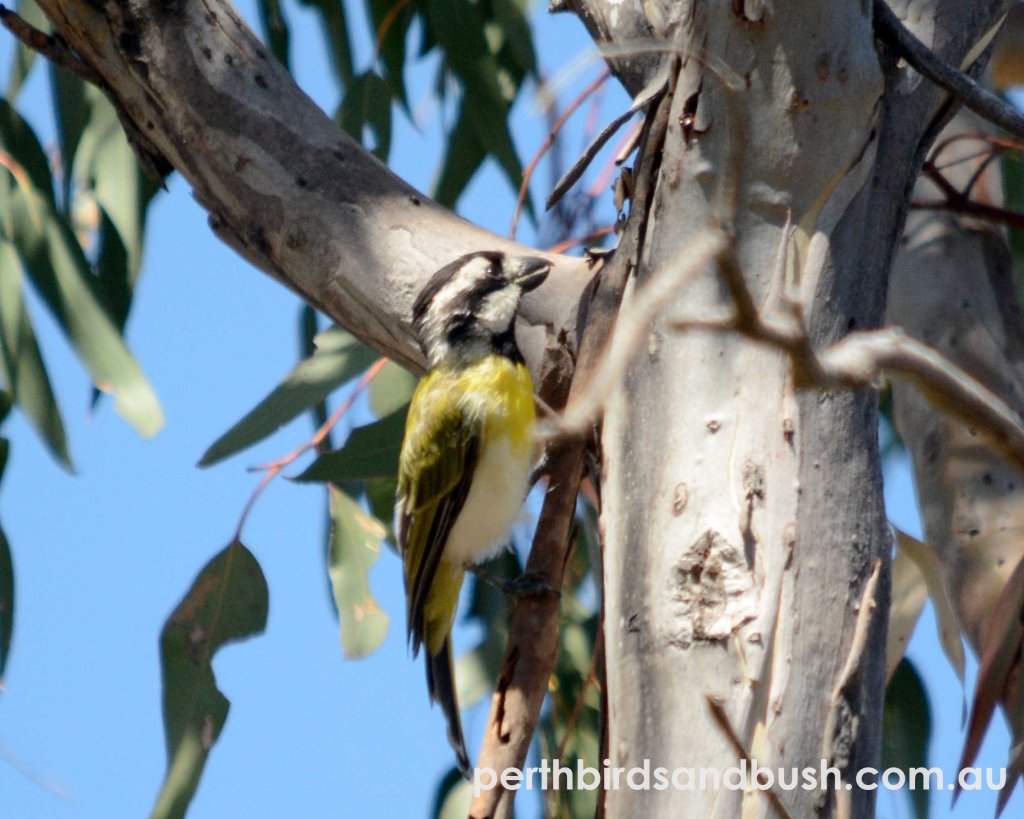
Western Shriketit foraging on a Eucalyptus wandoo tree.
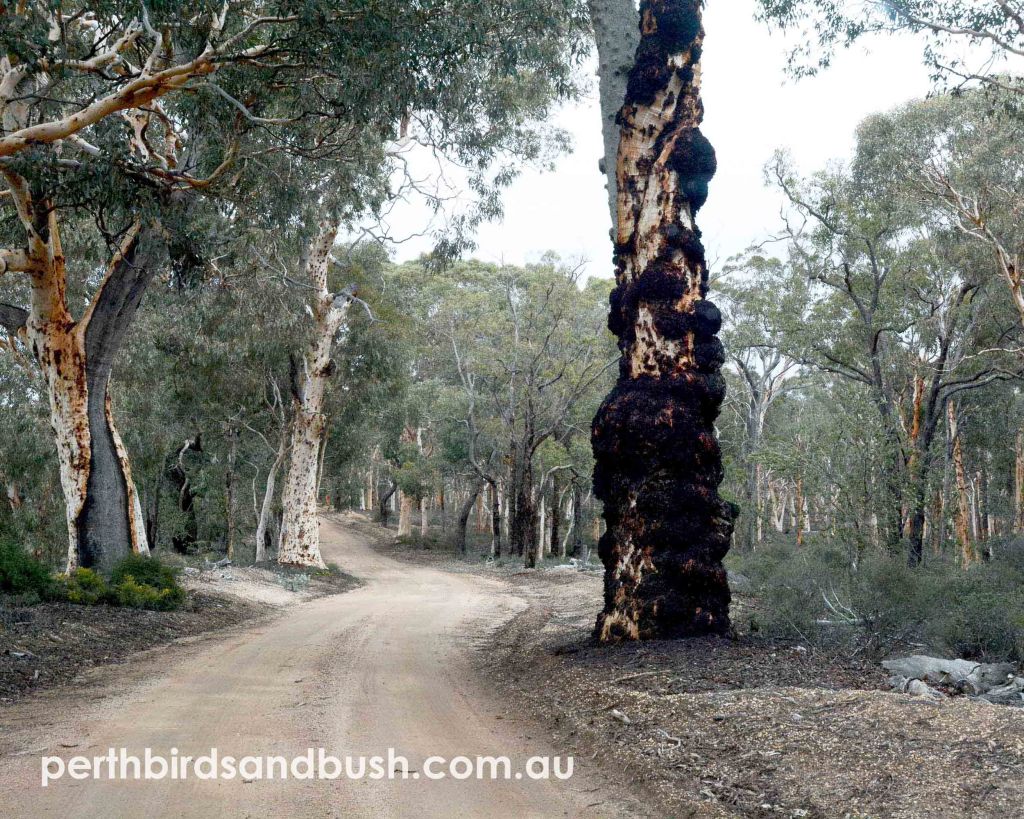
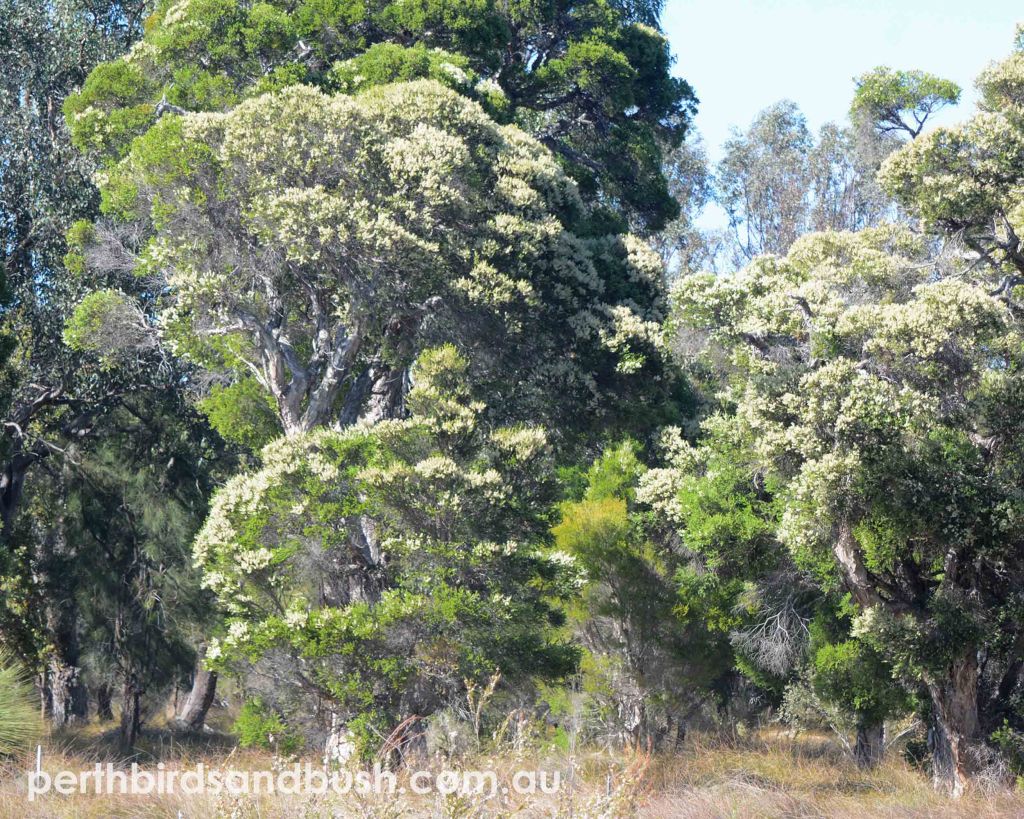
When I am bird watching or looking at wildflowers, I am often looking at the sky, the shrubbery, the ground, the water or the tree tops. But I don’t often look at the trees! Sometimes a tree or group of trees will stand out and look simply stunning. Driving thru the Wandoo east of Perth, is one of those moments when I find myself looking at those beautiful trees!
Wandoo National Park east of Perth.
Trees provide the structure of our bush, food and shelter for birds and other animals, and in a hot summer, some very welcome shade.
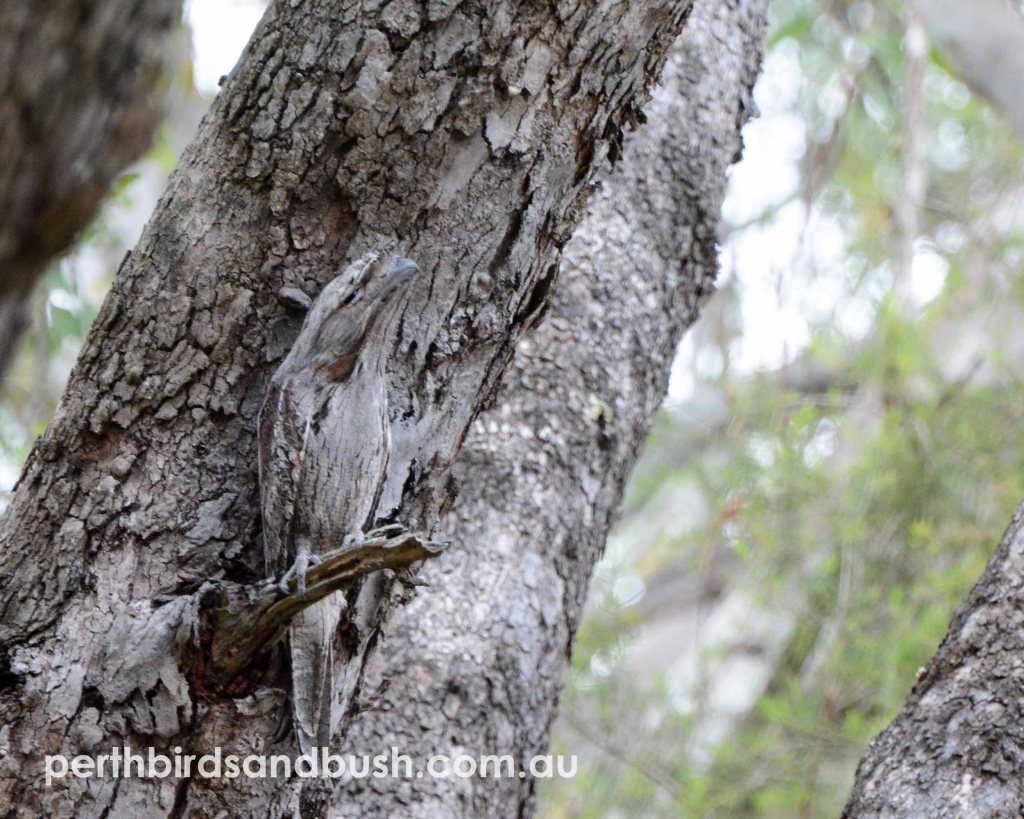
Tawny Frogmouth camouflaging and resting near the trunk of a Flooded or Swamp Gum (Eucalyptus rudis).
A tree is biologically defined as a perenial plant, greater than 4 metres in height, with woody stems and branches and with a truck tightly bound to the earth. There is quite a variety of trees that are native to the Perth area. Some of those that are flowering in January are:
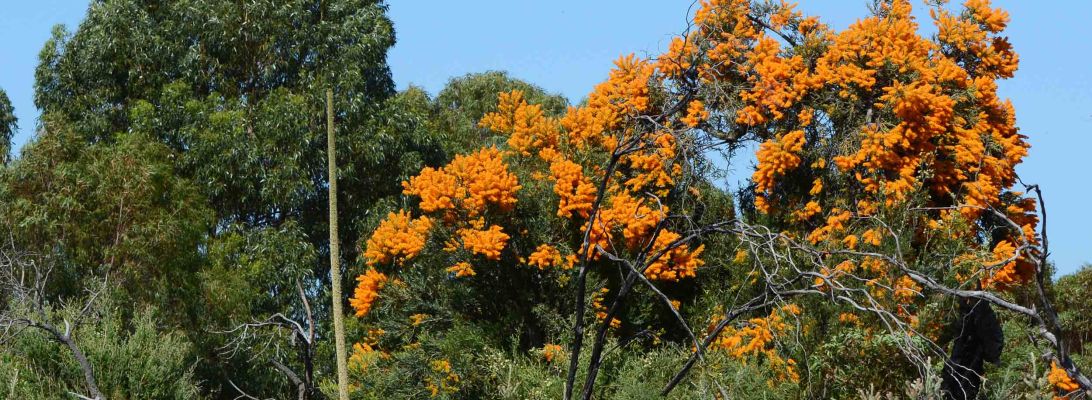
The Western Australian Christmas Tree or Moojar (Nuytsia florabunda) is the largest parasitic plant in the world! Moojar is a highly significant plant to the Noongar people as a ghost tree or tree of souls (see more).Moonah (Melaleucapreissiana) is a tall paperbark that grows from about Geraldton to Albany in sandy soils and swamps. It is a prolific flowerer. The Noongar people used the leaves to treat colds and headaches and the bark was used for a variety of purposes (see more)Jarrah (Eucalyptus marginata) is found from about Greenhead to Bremer Bay and is a very common tree in Perth bush. Jarrah furniture has a rich red colour and can be found in many furtinature stores in Western Australia. It grows to a height of 40 metres!Slender or Candlestick Banksia or Piara (Banksia attenuata) is a wide spread species which can be found from Shark Bay to Bremer Bay. Its beautiful yellow flowers are long cylindric shaped and grow to 26 centimetres long! The flowers are used by Noongar people for medicine and as a refreshment (see more).
Trees also provide habitat for nests, either to be built on a branch or fork or in a hollow. Some trees take many decades before they can provide nesting hollows for many birds.
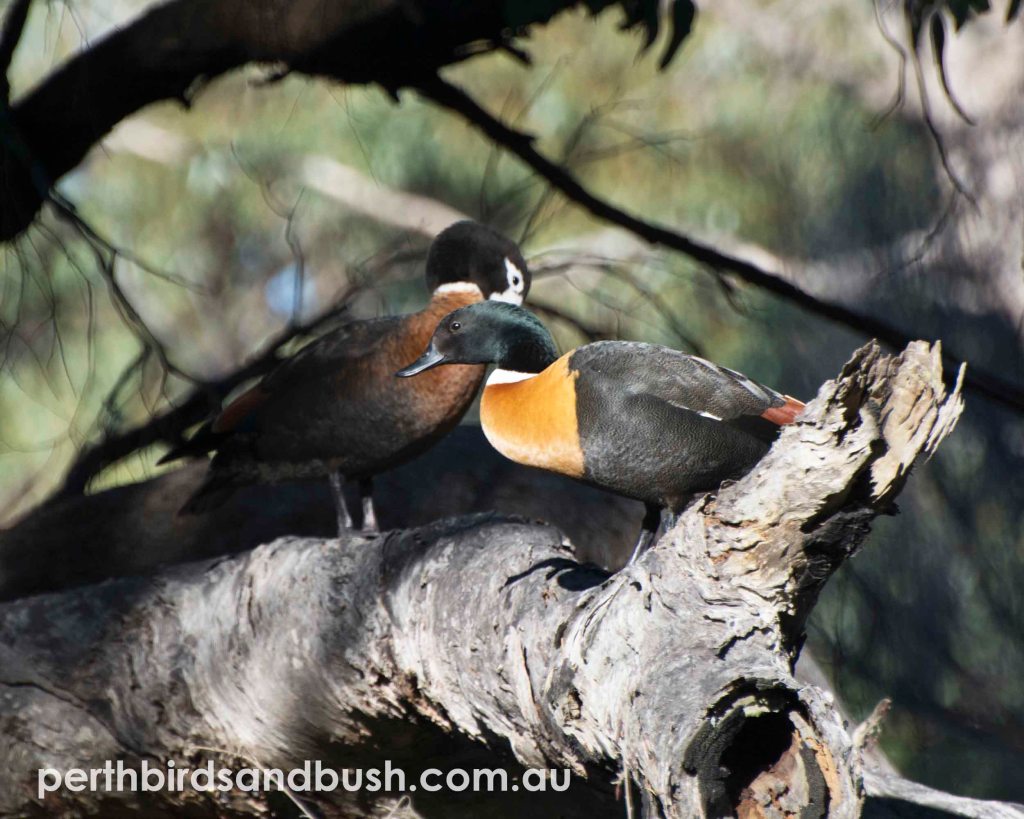
These Australian Shelduck (Tadorna tadornoides) were seen in a Tuart (Eucalyptusgomphocephala) forest near the beach during breeding season. Tuart trees drop branches and provide hollows for many bird species to nest in. Tuart are another tall tree that flower in January. Find out more about Tuarts here.
We all need to protect and take care of our trees. Many thousands are cut down in Western Australia each year and many thousands are also planted by conservation groups, farmers and those that care. Unfortunately, a newly planted tree will take a very long time to provide the habitat that an old one, cut down provided, sometimes hundreds of years. But it is very important to plant trees for the future generations of people and animals alike. You can usually find an environmental group that is planting trees in winter, where ever you live in Perth. Join in with them – it’s good for the soul, good for the environment and you will enjoy the company of happy, caring people!
Wow that felt like a long winter! Spring has been in the air for most of August and now its here! Spring means so much – more stunning wildflowers, birds arriving for summer stays, birds looking gorgeous in their breeding plumage and the bush looks super with all those beautiful flowers and gorgeous brightly coloured birds.
Prickley Hovea (Hovea pungens) bringing beautifully bright colour in late August 2021 at John Forrest National park.
All the social media seems to be full of fantastic wildflowers with many locals heading north where the amazing everlastings are literally colouring the country in white, yellow and pink! Luckily for us in Perth that means that the wave of colour is arriving here in Perth! A few months ago social media was lighting up with the colours of the Kimberly and Pilbara, now its the Gasgoyne, Northern Wheatbelt, Northern Goldfields and eastern Goldfields. The wave of colour will roll all the way into the deep south west of Australia before Christmas.
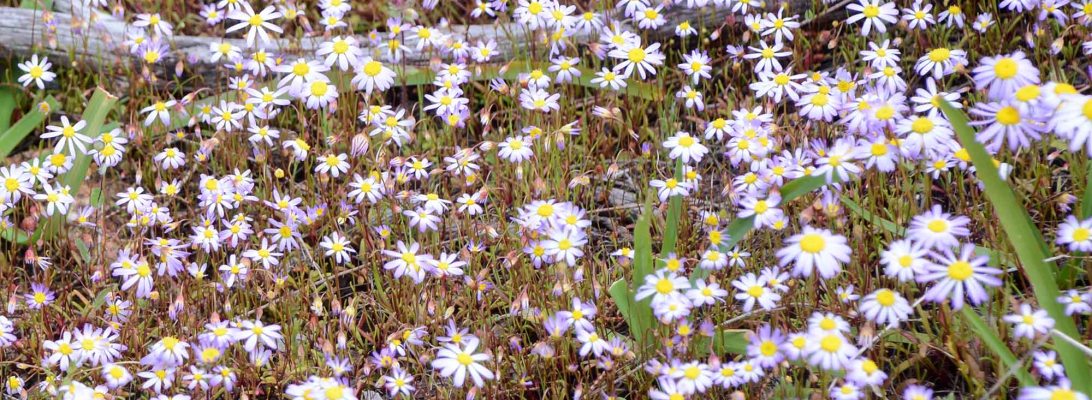
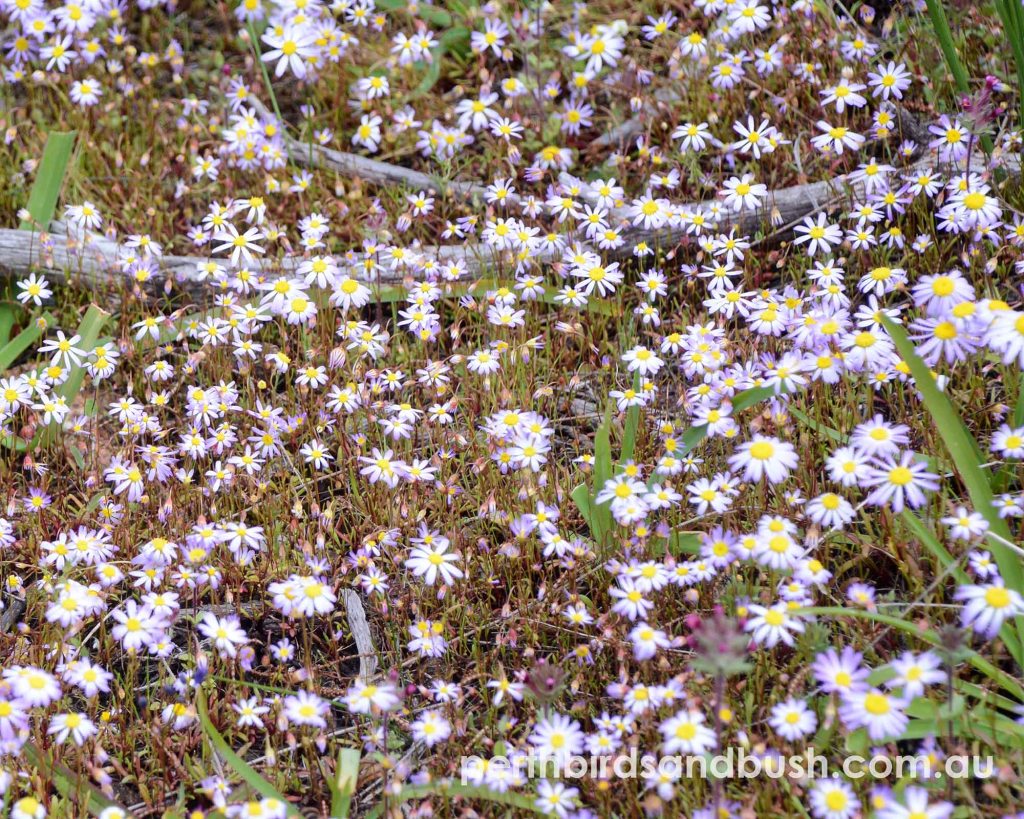
Masses of Swan River Daisy see on tour with Kathy and Doug at the begining of September 2021
Every patch of bush has a nice variety of flowers showing in central, eastern and southern WA in spring! Including in and all around the suburbs in Perth.
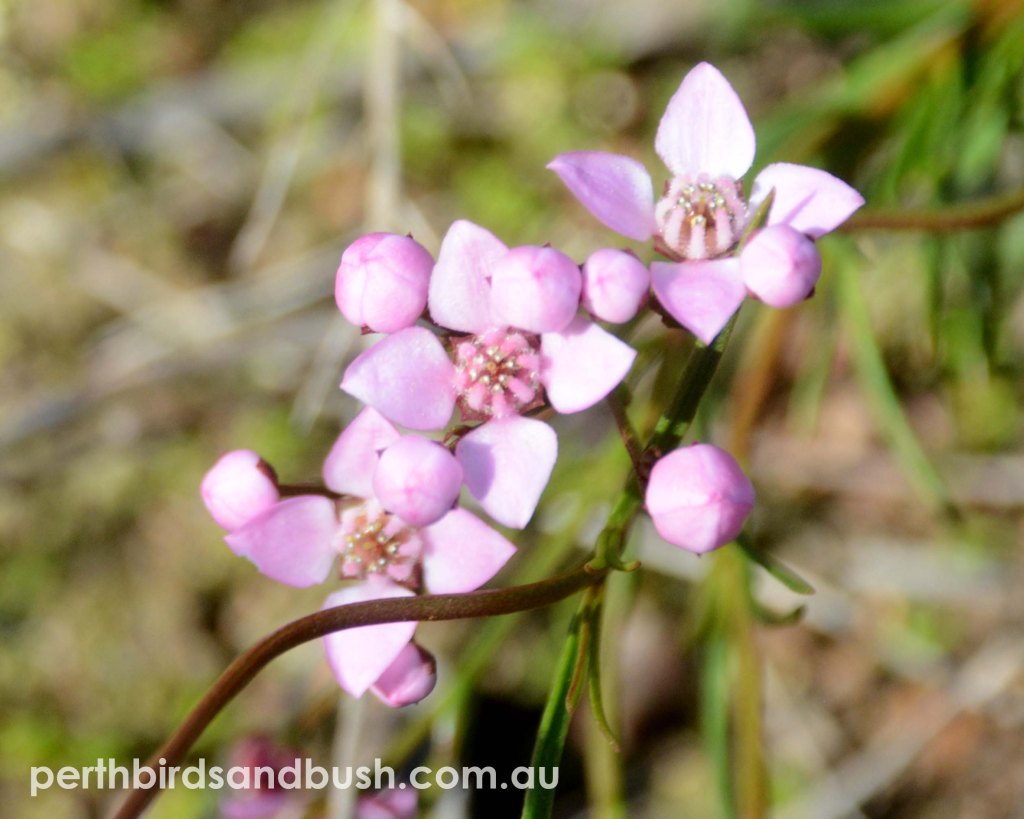
Granite Boronia (Boronia cymosa) bringing delicate pink to the Darling Scarp. Photographed in late August 2021.
It will make you feel better to walk down the road to your nearest patch of bush and really look at the flowers. Get down and smell them. Look for Spring Green Beetles in the Wattles (Acacia species) and Buttercups (Hibbertia species).
Spring Green Beetles (Diphucephala species) in Prickly Moses (Acacia pulchella) shine bright and reflect different colours when they move!
Of course, we are more than happy to take you on a Wildflower Tour to show you some super places!
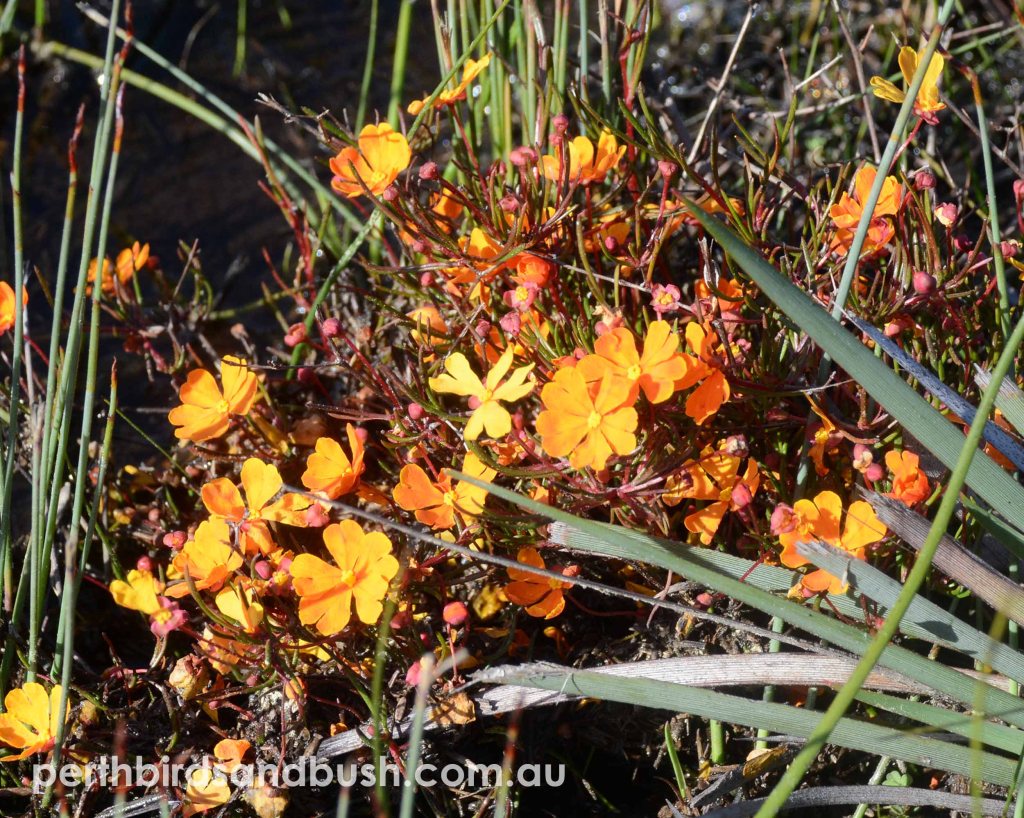
Orange Stars (Hibbertia stellaris) is just starting to emerge near Manjimup. It looks like the road side is on fire!
Just get outdoors, feel the warmth of the sun, smell the wildflowers and listen to those marvelous birds! Spring will disappear before we know it!
Numbats are an Australian endemic and endangered species with an estimated population of less than 1000 individuals. They were once found in five Australian states but massive declines in the population has resulted in them now only being found in a small part of Western Australia. These gorgeous critters deserve our respect and protection!
A Numbat searching for food.
The closest places to Perth where you are likely to see a Numbat are in Drandra Woodland Reserve and Boyagin Rock. These are a few hours drive from Perth. But before you hit the road I recommend having a good look at the information on the Project Numbat Website. The good people at Project Numbat are raising funds to help research and conserve the species as well as rise community awareness. They have some absolutely adorable products on their website shop so that you can also help raise funds for this important work! You can also become a member and give them a donation. All these things will assist with protecting some of the most amazing and beautiful characters on the planet!
Numbats eat termites, termites and only termites! They are pretty small and measure from the tip of their nose to the tip of their tail about 32 to 50 cm. But they have a comparatively long and thin tongue that is about 10 cm long so they can lick up termites out of logs, dirt etc.
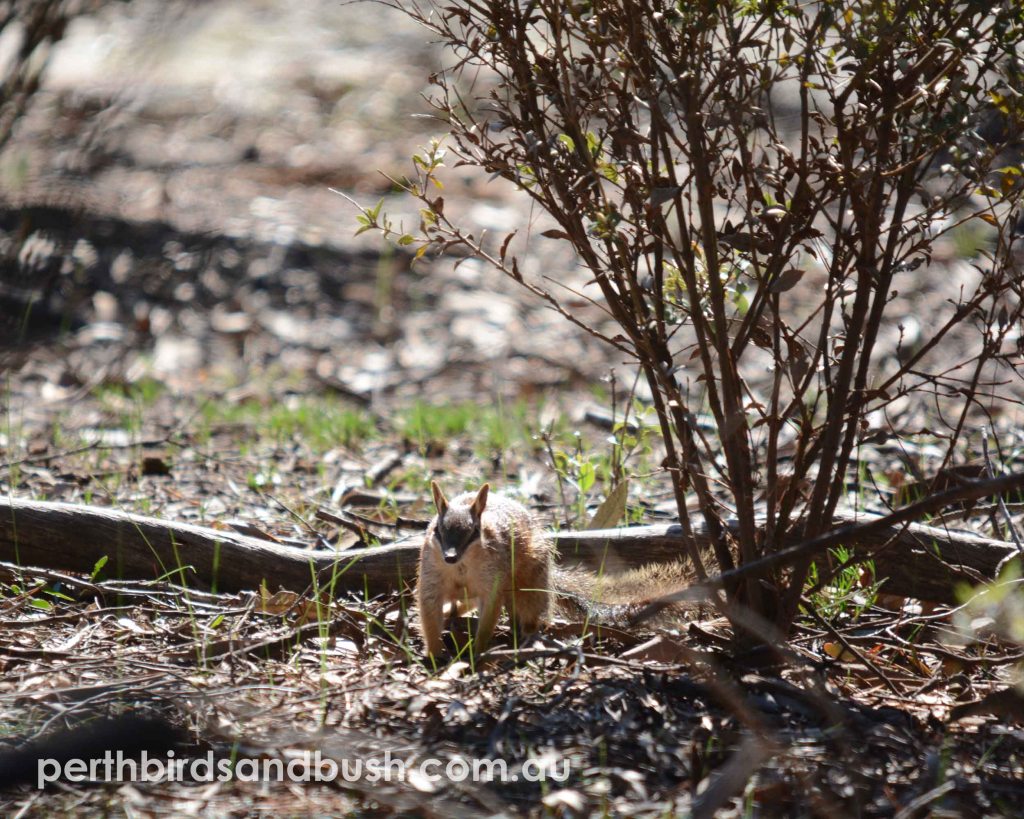
A less cropped photo gives a better idea of the Numbat’s small size.
Numbats are carniverous marsupials but feeds during the day. This is very unusual for marsupials. It means that you can see these from Perth on a day trip. But their small size and small population make them not the easiest to find. I spent a full day driving from Perth to see this Numbat from my car for about 2 to 3 minutes. Watching them from a car enables you to see the Numbat going about it’s business without frightening it. Stressing animals is not the aim of enjoying natures wonders!
Numbat foraging for termites.
Numbats only come together as a pair to breed. So mainly you will only see one at a time.













 Perth Birds and Bush