Wildflower, Waterfall and Wildlife tour

Vickie and Murray were visiting from Queensland and wanted to get out to see some of Perth’s wildflower and parklands. They booked on a 4 hour Wildflower, Waterfall and Wildlife tour which was a shortened version of the one advertised on the tours page. The shortening of the tour meant that the Zig Zag Scenic drive was taken out of the 5 hour tour package as Vickie was keen to see Wildflowers and the two waterfalls as they were flowing well and Queensland is in the middle of a terrible drought.

First stop was the Wildflowers in the Ellis Brook Valley which is part of Banyowla Regional Park. On the drive into the park we saw a large group of Western Grey Kangaroos, Red-tailed Black-Cockatoos and Baudin’s Black-Cockatoos. The wildflowers are not at their peak yet in August but there were still a lot of wildflowers blooming beautifully. Parts of the distant hillside at Ellis Brook were whitened with the many white flowering hakeas (Hakea Trifurcata and Hakea lissocarpha).

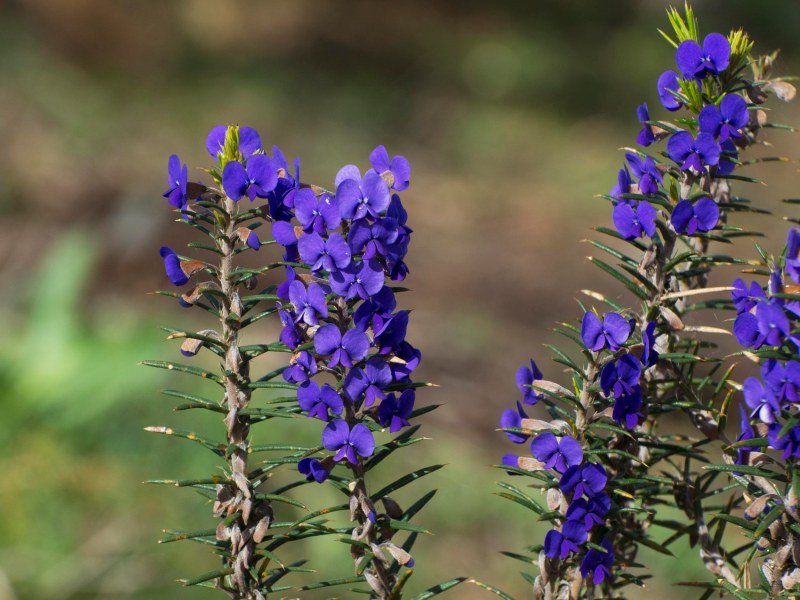
Prickly Hovea (Hovea pungens)
Prickly Hovea (Hovea pungens) is a prolific flowerer from June to November.

But there was a lot of other colourful blooms. Yellow was well represented with Buttercups (Hibbertia hypericoides), Golden Hibbertia (Hibbertia aurea), Many-flowered Honeysuckle (Lambertia multiflora) and Prickly Moses (Acacia pulchella), all covered in bright yellow flowers. The dense purple flowerings of Prickly Hovea (Hovea pungens) and Native Wisteria (Hardenbergia comptoniana) are always hard to ignore! There were stunning red flowers on the Candle Cranberry (Astroloma filiosum), Moss-leaved Heath (Astroloma ciliatum) and Fushia Grevillea (Grevillea bipinnatifida). Vickie was taken with the beautiful soft pink grey flowers of Granite Petrophile (Petrophile biloba) and we found one bush of Pincushion Coneflower (Isopogon dubius) covered in bright pink flowers. Many other Pincushion coneflowers were covered in buds as were the Verticordia acerosa indicating we are weeks away from the hillside being covered in yellow with dots of bright pink. We found several orchids out including the Bluebeards (Cyanicula deformis), Midge Orchid (Cyrtostylis huegelii) and Common Donkey Orchid (Diuris corymbosa).

Petrophile biloba
Granite petrophile (Petrophile biloba) flowers from June to October.

We went to the Sixty Foot Falls in Banyowla Regional park and walked up to the first lookout. The falls are flowing well and were lit in beautiful sunshine while we were there. We were very lucky too that there was only one group of other people in the area so virtually had the place to ourselves! This enabled us to relax and enjoy the sights, sounds and atmosphere to the fullest!

The Sixty Foot Waterfalls and the first lookout in Banyowla Regional Park.

Next we had afternoon tea at Bickley Brook Reservoir and on the way there saw another much larger group of Western Grey Kangaroos! At Bickley Brook the water was flowing well and it was nice to hear its cascade as we enjoyed out drinks and snacks while be entertained by some caroling Australian Magpies!

Australian Magpie
The Australian Magpie is a very common species throughout Perth.

Our final stop was the Lesmurdie Falls in Lesmurdie National Park. The Falls are just in spectacular form this year as there has been good rains. The tracks to the waterfall were surrounded with flowering Hakeas and Karri Hazel (Trymalium odoratissimum). These falls are the best in Perth and it was surprising that there were only a few people there enjoying the spectacular scenary. Thanks to Vickie and Murray for their wonderful company and for booking on this new nature tour being offered by Perth Birds and Bush!

Lesmurdie Waterfall
Lesmurdie Falls in August 2018 are looking spectacular!

Two full days of Birdwatching near Perth

Splendid Fairy-wren

Walter from Hawaii had visited Australia before but had never been to Perth. He is a keen bird photographer and was interested in seeing and photographing a wide variety of species when he came on two full day tours with Perth Birds and Bush. Top of his wish list were a number of ducks, parrots, cockatoos, raptors and the fairy-wrens in breeding plumage.

On our first day we headed north east of Perth to the Wandoo Woodlands in the Avon Valley, with morning tea at Northam Weir in the heart of Northam. We meandered along the Avon looking for raptors and other target species and finally had lunch in Toodyay. On the way back into Perth we visited Noble Falls briefly before some time at Herdsman Lake and Lake Monger. It was a great day of sunshine and no wind perfect for birdwatching and enjoying the sights and sounds of our beautiful bushland and wetlands! We saw a total of 64 species on our first day.

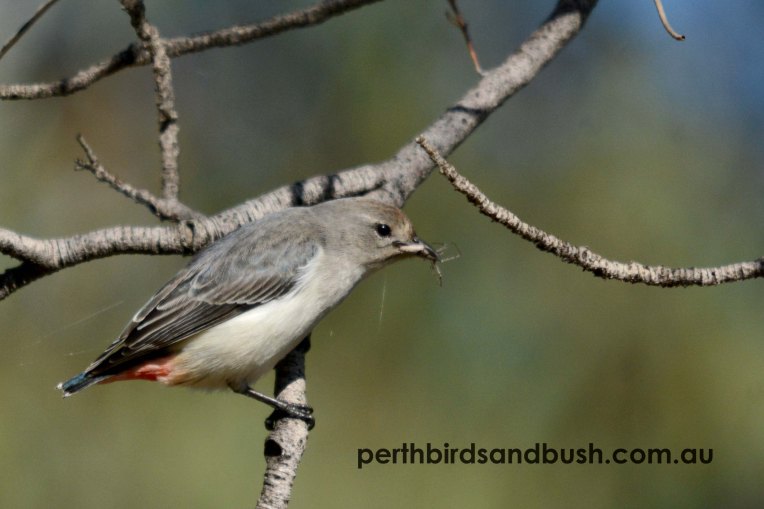
Mistletoebird
This female Mistletoebird was oblivious to our presence as she collected a spider for morning tea!
The farming areas in the Avon Valley are a good spot to see Crested Pigeon! But they can also be found in the outer suburbs of Perth.
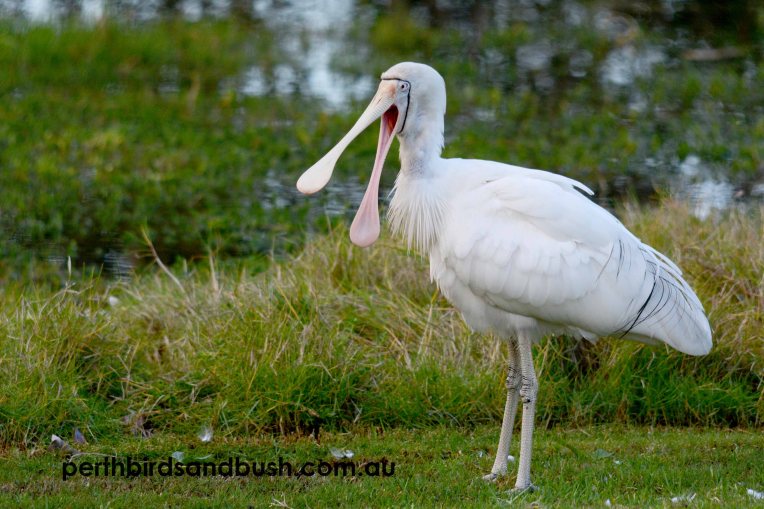
Yellow-billed Spoonbill
A Yellow-billed Spoonbill was yawning as we left Herdsman Lake in the late afternoon.

On our second day we headed south visting several wetlands before heading east to the Jarrah/Marri Forests of the Darling Range in Jarrahdale. We had morning tea at Wellard Wetlands and lunch in the garden of a local café in Jarrahdale. After lunch we headed back onto the Swan Coastal Plain and drove thru farming areas to see birds that are more prominent in farms and then went back up into the Jarrah/Marri forest of the Darling Range. We managed to see another 23 species on our second day bringing the total for the trip to 87 species. Many of these species were photographed by Walter!

Splendid Fairy-wren
We saw a big family of Splendid Fairy-Wrens on our last day. This non-breeding plumage male was very relaxed in our presence. Luckily Walter also saw and photographed a beautiful male in full breeding plumage!
Red-winged Fairy-Wren
This male Red-winged Fairy-Wren was a real poser and very friendly too!

Birdwatching Weekend in Dongara

A few weeks ago I went to a long weekend campout at Dongara with BirdLife WA members. A wonderful relaxing weekend for me birding with friends and being organized by the wonderful campout leader Sue!

We visited lots of sites but the highlights were definitely:

  • Coal Seam Conservation Park
  • Ellendale Pool
  • And the 4.6 km Dongara River Mouth walkway.
Coal Seam Jun18 RP Dongara DSC_4238a
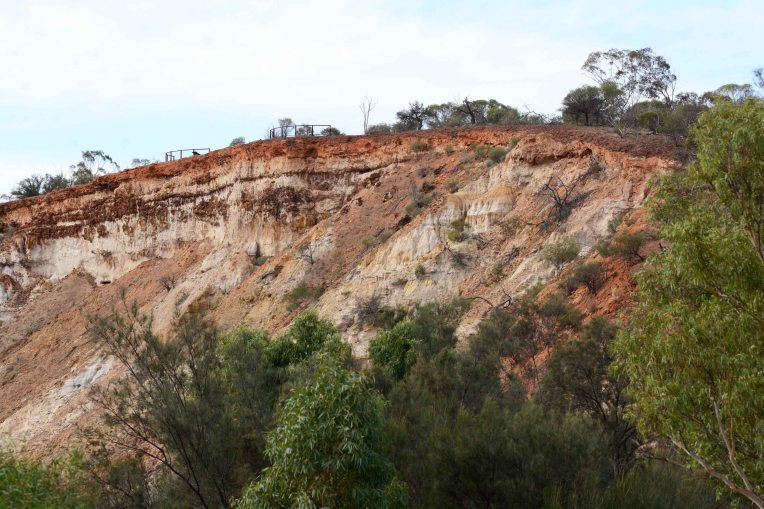
Coal Seam Conservation Park is a beautiful park. There was water in the Irwin River when we were there with the river able to be crossed in 2WD cars.

As a group we saw 110 species of birds after visiting a wide variety of different habitats in the area. This included quite a number of year first birds for myself and many others on the trip!

Bird highlights were: Mulga Parrots, Australian Ringneck subspecies zonarius, White-winged Fairy-Wren (in breeding plumage), Chestnut-rumped Thornbill, Redthroat, White-plumed Honeyeater, Spiny-cheeked Honeyeater, Red-capped Robin, Little Woodswallow, and Zebra Finch.

Mulga Parrot male RP Jun18 Coal seam DSC_4175pbaba
Mulga Parrot at Coal Seam. A dryland/inland species not seen in Perth.

We stayed at the Sea Spray Caravan Park which has a variety of accommodation options and is located right on the beach and next to the river mouth. So it is well located for birdwatchers! I found the caravan park to be well maintained, clean, and the owners were welcoming and helpful. Their most basic camping option is a powered site with ensuite which was very luxurious for this Aussie camper!

Redthroat RP Coalseam Dongara Jun18 DSC_4288pbaba
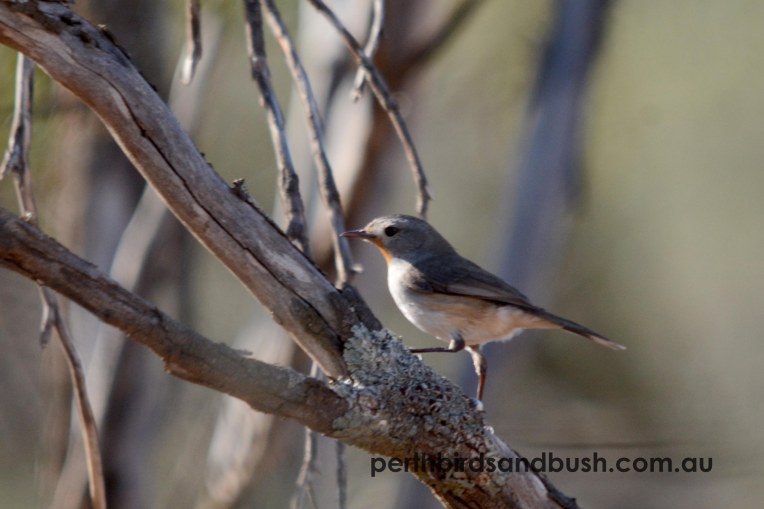
Redthroat at Coal Seam Nature Reserve. This is an inland/dryland species not seen in Perth.
red cap robin Burma Road RP Jun18 DongaraDSC_4090pbaba
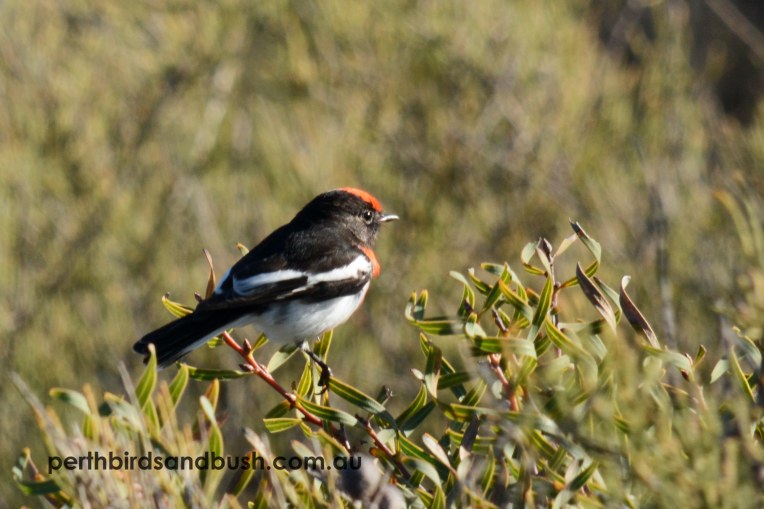
Red-capped Robin’s were at every site we visited!

BirdLife WA have campouts most long weekends but are for members only. You can become a member by visiting the BirdLife Australia website at http://www.birdlife.org.au/ . Unfortunately, I don’t have time to go on many of the campouts but I always have a wonderful time when I do!

Aust ringneck ssp zonarus coal seam Jun18 RP DSC_4118pbaba
Australian Ringneck subspecies zonarius. In Perth we have both this subspecies and semitorquatus, but most of ours are hybrids or ssp semitorquatus. So it was beautiful to see lots of these nice yellow bellied birds!